
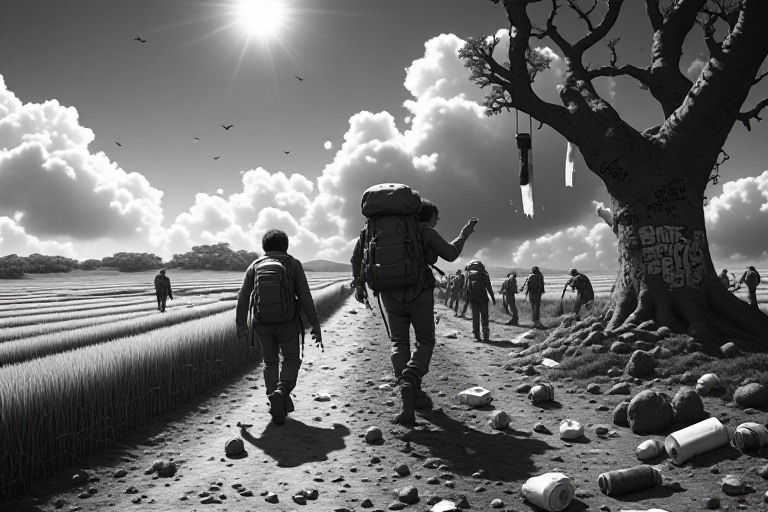
By me — No sponsors. No strings attached. Just the raw truth.
Introduction: A Contrarian Takes the Path
You’ll find countless glowing articles about the Camino de Santiago. Picturesque sunsets, spiritual transformations, profound friendships. It’s everywhere on social media and in travel blogs. But what happens when someone walks this legendary trail and finds… well, something else entirely?
That’s the story I’m here to share. This article will be a contrast to all other Camino pieces out there. And that’s the real truth. No filters. No sponsored partnerships. Just honest opinions. Be prepared to agree to disagree.
Who Am I? Why Was I Even There?
Before diving into the journey itself, let me establish credibility—and motivation.
I walked the “Pagan Route” from Saint-Jean-Pied-de-Port all the way to Finisterre. I’m an experienced hiker and climber, a member of the Alpine Club in Austria, and I’ve trekked across several countries on multiple continents. I’m not religious. I simply love hiking.
The Camino became my choice primarily because of the infrastructure and the promise of bonding with fellow hikers—a camaraderie I’d already experienced in European mountain huts and other international hiking communities. What awaited me, however, was quite different from what I expected.
Week One: The Disillusionment Begins
The frustration of being deceived by all the literature and media content about the Camino started becoming painfully obvious by the end of the first week.
Let’s talk about people. Inconsiderate people. Egoistic behavior. A startling lack of sympathy. There were nearly physical fights in dorms because someone wanted windows open while another wanted them closed. I never experienced such behaviours before.
Common areas were disgusting. We’re talking filthy kitchens, rubbish everywhere and biohazard-level conditions in toilets and showers.
Where is the magic? Where is the camaraderie? Where are the good manners of these people who call themselves “pilgrims”? Shouldn’t we all be in tune since we’re literally in the same boat?
Week Two: At the Breaking Point
By the second week—near Puente de La Reina—I was seriously considering my options. Frankly, I was about to throw in the towel.
This is not fun. At all.
I started looking for other hiking trails further south in Spain just to salvage my hiking adventure. The Camino route has nothing to do with the Spain I know, respect, and love. Note that I lived in Spain for more than ten years and traveled the whole country during that period. So I know what I’m talking about.
In short: the main routes of the Camino de Santiago do not reflect the Spanish culture. Far from that. It’s somewhat of a tourist trap—like the Everest tours—fueled by greedy business owners, “influencers,” and “Camino experts” whom I suspect distribute carefully curated, paid content instead of the truth.
To prove my suspicions; try making any realistic comment about the Camino in any media channel, and you get labeled a “hater.” Or you encounter silence when asking genuine questions.
The Accommodation Reality Check
So I decided on a new strategy: spend more money and book only private albergues. But before I continue, let me clarify this crucial point:
Not all public albergues were bad. Not all private albergues were bad. All the “donativo” (donation-based) albergues were good, as well as those run by the church (mostly). Keep that in mind if you’re planning your pilgrimage.
Unfortunately, the available private albergues on my route were often disasters: filthy, unfriendly hosts, packed to capacity. Imagine your bedroom with five bunk beds stacked next to each other, one window, one shower, one toilet for everyone.
One particularly tragicomic situation occurred in a private albergue where the coffee for breakfast (sold separately) had been made the night before, and you were given a microwave to reheat it. Luckily, I always bring a small moka pot.
And the hope that the next place would be better than the last? That never materialised.
Changing Goals: From Adventure to Challenge
With no desire to give up on my original plans, I changed the goal instead. From this point forward, this wasn’t a long-distance hiking adventure anymore—it was a challenge.
I needed to reach Finisterre, no matter what.
After a whirlwind of inconsiderate people, subpar accommodations, sleep deprivation, and a few (very few, to be honest) nice moments, I finally arrived at Finisterre. And I did appreciate the sunset at Kilometer 0, right next to the lighthouse. Mission accomplished!
What Worked: The Bright Spots
Despite the chaos, there were moments worth cherishing:
Standout Stays
- Casa Rural La Alpargatería – Villafranca Montes de Oca: Best private albergue: kind, attentive host. Amazing bedroom with scented bed linens, two kitchen areas, fewer rooms = less crowding. Kind host.
- Hostal Plaza Mayor – Carrion de Los Condes: Clean, comfy and well-kept. Very friendly host.
- Albergue de Peregrinos de Atapuerca –Nice one! Take the opportunity to visit the archaeological site of Atapuerca.
- Espíritu Xacobeo Municipal – O Pedrouzo. The kind and super attentive host reserved a private space for us. Also offered a free ride to supermarket. The place is clean, well organised and comfortable.
- Donativo/Church-run albergues – Consistently better experience throughout the route
Human Connections
I made new hiking-friends from Italy, Canada, China, Austria, and Spain. I still keep in touch with some of them. These genuine connections remind us that individuals, not systems, carry the soul of any journey.
What Didn’t Work: The Pain Points
Here’s an honest inventory of what frustrated me most:
Pilgrim Behavior Issues
- Arrogance: Why bother walking the Camino when you’re not doing good or respecting others?
- The Bed Race: Inconsiderate people wake at 5 AM, rush to the next albergue to sleep all day. When I arrive – around 14:00—then they call me inconsiderate for making noise (in the afternoon!).
- Lack of Privacy: Particularly problematic for women in dorms.
- Disruptive Behavior: Adults acting like bratty kids during silent times, every day, everywhere. I wonder if they behave like that back home.
- Noise Pollution: Loud people. Very loud people. And people blasting music from speakers attached to their backpacks.
- Dormitory Nightmares: Loud talking, overcrowded rooms, no airflow, rocking bunks, inconsiderate “pilgrims”waking the whole room at 5:00 AM and also packing in the middle of the night.
Infrastructure Failures
- Insufficient Rest Areas: Too few, abandoned, filthy, incomplete.
- Registration Overload: Why not one unified system?
- Toilets: Often unavailable along the way.
- Food Monotony: Same dishes in every village. And expensive.
- Cash Machine Fees: High charges; go to a bank instead.
- Cyclists & Bikers: Watch out—they’re everywhere on shared paths.
Cultural Friction
- People expect locals to speak their language rather than attempting Spanish.
- Arrogant attitudes that contradict the humility supposedly inherent in pilgrimage.
Final Thoughts
Maybe the Camino isn’t for me. I’m an experienced mountain hiker—not originally a long-distance walker (well, now I am that too). Walking through dirty flatlands, loud people, crowded cities, and alongside motorways was quite uninteresting for me personally.
Do I Recommend It?
Not really.
The extreme low cost-benefit ratio makes it hard to endorse. I would definitely never do it again. There are nicer places to go with more compatible people to share the journey with.
My Honest Recommendation
Walk a week before deciding what you think. Firsthand experiences speaks louder than any secondhand opinion—even if yours differs from mine. If possible, skip the Sarria-to-Santiago section—it was the crapiest part of my Camino. You’ll encounter many casual hikers rushing those final 100km just to earn the certificate for social media.
This video resumes it all.
Anyway, safe hikes.
e.
Leave a Reply