Category: Trips & Travels

  • Beyond the Postcard: Exploring Sri Lanka

    Beyond the Postcard: Exploring Sri Lanka

    Sri Lanka: Where Asia Shines

    Several years ago, I found myself stepping off a flight into Colombo, little knowing what awaited me. What I discovered was not merely a holiday destination, but an experience that would linger in my memory long after departure.

    COLOMBO: FIRST IMPRESSIONS MATTER

    The capital city greeted me with unexpected charm.

    Contrary to any preconceived notions about South Asian urban chaos, Colombo struck me as remarkably clean and organised. There was an orderliness to everything that belied its vibrant energy. But more than the infrastructure, it was the people who made the deepest impression.

    Everyone I met on the streets sported a nice smile.

    A CULINARY ODYSSEY

    The local cuisine also proved to be very interesting to me. Sri Lankan food is a right mix of flavours and aromatic spices.

    I liked the rice and curry – not the single curries you might know, but several small varieties served alongside steaming rice, the kottu roti: chopped flatbread stir-fried with vegetables, eggs, and meat, and the hoppers: bowl-shaped pancakes made from fermented rice flour, perfect with a soft-boiled egg nestled in the centre.

    SPIRITUAL HORIZONS: THE TEMPLES

    No exploration of Sri Lanka would be complete without acknowledging its sacred heritage.

    The Temple of the Sacred Tooth Relic in Kandy stands as perhaps the most revered Buddhist site on the island, housing what is believed to be Buddha’s actual tooth.

    Then, there’s Ruanweli Dagoda in Anuradhapura, one of the tallest ancient stupas in the world, its golden dome gleaming against the tropical sky – a testament to over two millennia of continuous worship.

    Finally, the Galle Fort Dutch Reformed Church reminded me of the island’s colonial complexity, where Christian heritage sits alongside Buddhist and Hindu traditions.

    THE TEA CULTURE: MORE THAN JUST A BEVERAGE

    During a visit to the tea plantations I learned that Sri Lanka’s tea industry traces back to 1867 when Scottish planter James Taylor established the first commercial tea garden in Knuckles District.

    Before that, coffee dominated cultivation until devastating blight destroyed entire crops. The locals turned to tea – and they never looked back.

    Today, Ceylon Tea remains a global gold standard, grown at high altitudes across the hill country.

    SIGIRIYA: ASCENDING AN ANCIENT KINGDOM

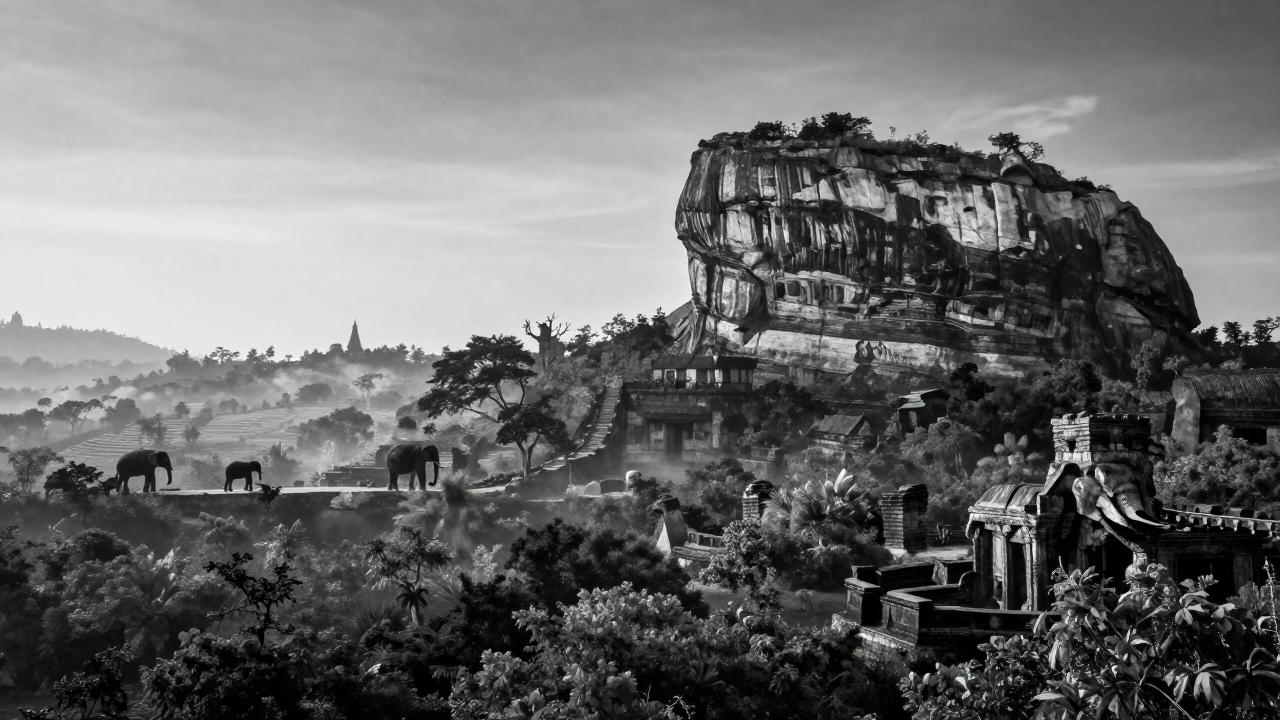
    Sigiriya (sometimes pronounced Sirigia as many locals do) is a fifth-century rock fortress that rises nearly 200 metres above the surrounding jungle, a marvel constructed during the reign of King Kashyapa.

    He built his palace atop this massive column of rock following a bitter succession dispute – either brilliant strategy or madness, depending on which chronicler you read. Climbing to the summit involved navigating ancient water gardens, fresco galleries (some surviving paintings still visible), and mirror walls once polished so reflective the king could see his own reflection.

    From the top, the panoramic views across the central jungle were simply magnificent – green canopy stretching endlessly, broken only by other rocky outcrops piercing the horizon like islands in an ocean.

    ELEPHANTS PARADING THROUGH COLONIAL HISTORY

    Back in Colombo, I witnessed the elephant procession – a rare treat in the heart of the city. Watching these majestic creatures adorned in ceremonial decorations moving through streets lined with palm trees created a moment of pure magic. They represent much of Sri Lanka’s cultural identity and religious significance, particularly in Buddhist tradition where they symbolise wisdom and royal power.

    PRATICAL ADVICE FOR FELLOW TRAVELLERS

    One crucial piece of advice for anyone planning their Sri Lankan adventure: negotiate tuk tuk fares firmly before boarding. Some drivers expect tourists to arrive unprepared and will quote astronomical prices upon reaching your destination. Be clear about the amount upfront, preferably using your hotel to help verify reasonable rates.

    THE VERDICT: ABSOLUTELY RECOMMENDED

    Would I return? Without hesitation, and sooner rather than later. Sri Lanka offers everything a discerning traveller seeks – authentic cultural experiences, breathtaking natural beauty, culinary adventures, historical depth, and human warmth rarely matched elsewhere.

    Seven or eight days barely scratches the surface. Yet even in that brief window, Sri Lanka revealed itself as a nation of extraordinary resilience, beauty, and hospitality.

    Go. See for yourself. You’ll understand why many call it Paradise on Earth.

  • The Camino Deception: An Unfiltered Hiker’s Perspective

    The Camino Deception: An Unfiltered Hiker’s Perspective

    By me — No sponsors. No strings attached. Just the raw truth.


    Introduction: A Contrarian Takes the Path

    You’ll find countless glowing articles about the Camino de Santiago. Picturesque sunsets, spiritual transformations, profound friendships. It’s everywhere on social media and in travel blogs. But what happens when someone walks this legendary trail and finds… well, something else entirely?

    That’s the story I’m here to share. This article will be a contrast to all other Camino pieces out there. And that’s the real truth. No filters. No sponsored partnerships. Just honest opinions. Be prepared to agree to disagree.


    Who Am I? Why Was I Even There?

    Before diving into the journey itself, let me establish credibility—and motivation.

    I walked the “Pagan Route” from Saint-Jean-Pied-de-Port all the way to Finisterre. I’m an experienced hiker and climber, a member of the Alpine Club in Austria, and I’ve trekked across several countries on multiple continents. I’m not religious. I simply love hiking.

    The Camino became my choice primarily because of the infrastructure and the promise of bonding with fellow hikers—a camaraderie I’d already experienced in European mountain huts and other international hiking communities. What awaited me, however, was quite different from what I expected.


    Week One: The Disillusionment Begins

    The frustration of being deceived by all the literature and media content about the Camino started becoming painfully obvious by the end of the first week.

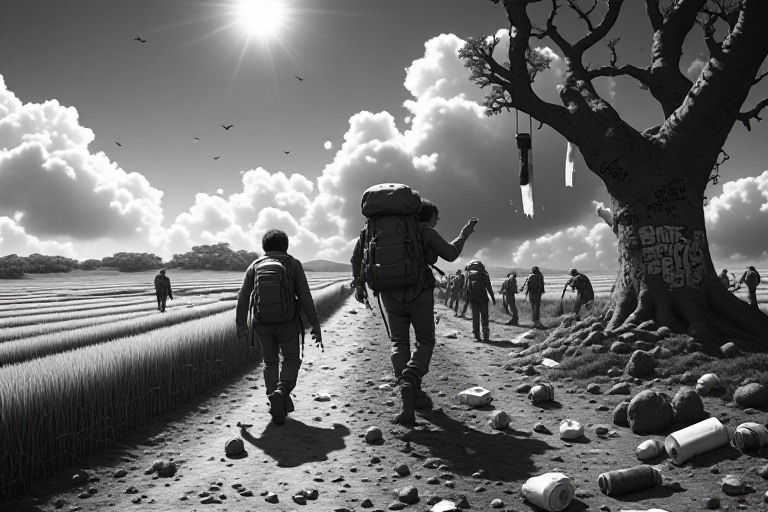
    Let’s talk about people. Inconsiderate people. Egoistic behavior. A startling lack of sympathy. There were nearly physical fights in dorms because someone wanted windows open while another wanted them closed. I never experienced such behaviours before.

    Common areas were disgusting. We’re talking filthy kitchens, rubbish everywhere and biohazard-level conditions in toilets and showers.

    Where is the magic? Where is the camaraderie? Where are the good manners of these people who call themselves “pilgrims”? Shouldn’t we all be in tune since we’re literally in the same boat?


    Week Two: At the Breaking Point

    By the second week—near Puente de La Reina—I was seriously considering my options. Frankly, I was about to throw in the towel.

    This is not fun. At all.

    I started looking for other hiking trails further south in Spain just to salvage my hiking adventure. The Camino route has nothing to do with the Spain I know, respect, and love. Note that I lived in Spain for more than ten years and traveled the whole country during that period. So I know what I’m talking about.

    In short: the main routes of the Camino de Santiago do not reflect the Spanish culture. Far from that. It’s somewhat of a tourist trap—like the Everest tours—fueled by greedy business owners, “influencers,” and “Camino experts” whom I suspect distribute carefully curated, paid content instead of the truth.

    To prove my suspicions; try making any realistic comment about the Camino in any media channel, and you get labeled a “hater.” Or you encounter silence when asking genuine questions.


    The Accommodation Reality Check

    So I decided on a new strategy: spend more money and book only private albergues. But before I continue, let me clarify this crucial point:

    Not all public albergues were bad. Not all private albergues were bad. All the “donativo” (donation-based) albergues were good, as well as those run by the church (mostly). Keep that in mind if you’re planning your pilgrimage.

    Unfortunately, the available private albergues on my route were often disasters: filthy, unfriendly hosts, packed to capacity. Imagine your bedroom with five bunk beds stacked next to each other, one window, one shower, one toilet for everyone.

    One particularly tragicomic situation occurred in a private albergue where the coffee for breakfast (sold separately) had been made the night before, and you were given a microwave to reheat it. Luckily, I always bring a small moka pot.

    And the hope that the next place would be better than the last? That never materialised.


    Changing Goals: From Adventure to Challenge

    With no desire to give up on my original plans, I changed the goal instead. From this point forward, this wasn’t a long-distance hiking adventure anymore—it was a challenge.

    I needed to reach Finisterre, no matter what.

    After a whirlwind of inconsiderate people, subpar accommodations, sleep deprivation, and a few (very few, to be honest) nice moments, I finally arrived at Finisterre. And I did appreciate the sunset at Kilometer 0, right next to the lighthouse. Mission accomplished!


    What Worked: The Bright Spots

    Despite the chaos, there were moments worth cherishing:

    Standout Stays

    • Casa Rural La Alpargatería – Villafranca Montes de Oca: Best private albergue: kind, attentive host. Amazing bedroom with scented bed linens, two kitchen areas, fewer rooms = less crowding. Kind host.
    • Hostal Plaza Mayor – Carrion de Los Condes: Clean, comfy and well-kept. Very friendly host.
    • Albergue de Peregrinos de Atapuerca –Nice one! Take the opportunity to visit the archaeological site of Atapuerca.
    • Espíritu Xacobeo Municipal – O Pedrouzo. The kind and super attentive host reserved a private space for us. Also offered a free ride to supermarket. The place is clean, well organised and comfortable.
    • Donativo/Church-run albergues – Consistently better experience throughout the route

    Human Connections

    I made new hiking-friends from Italy, Canada, China, Austria, and Spain. I still keep in touch with some of them. These genuine connections remind us that individuals, not systems, carry the soul of any journey.


    What Didn’t Work: The Pain Points

    Here’s an honest inventory of what frustrated me most:

    Pilgrim Behavior Issues

    • Arrogance: Why bother walking the Camino when you’re not doing good or respecting others?
    • The Bed Race: Inconsiderate people wake at 5 AM, rush to the next albergue to sleep all day. When I arrive – around 14:00—then they call me inconsiderate for making noise (in the afternoon!).
    • Lack of Privacy: Particularly problematic for women in dorms.
    • Disruptive Behavior: Adults acting like bratty kids during silent times, every day, everywhere. I wonder if they behave like that back home.
    • Noise Pollution: Loud people. Very loud people. And people blasting music from speakers attached to their backpacks.
    • Dormitory Nightmares: Loud talking, overcrowded rooms, no airflow, rocking bunks, inconsiderate “pilgrims”waking the whole room at 5:00 AM and also packing in the middle of the night.

    Infrastructure Failures

    • Insufficient Rest Areas: Too few, abandoned, filthy, incomplete.
    • Registration Overload: Why not one unified system?
    • Toilets: Often unavailable along the way.
    • Food Monotony: Same dishes in every village. And expensive.
    • Cash Machine Fees: High charges; go to a bank instead.
    • Cyclists & Bikers: Watch out—they’re everywhere on shared paths.

    Cultural Friction

    • People expect locals to speak their language rather than attempting Spanish.
    • Arrogant attitudes that contradict the humility supposedly inherent in pilgrimage.

    Final Thoughts

    Maybe the Camino isn’t for me. I’m an experienced mountain hiker—not originally a long-distance walker (well, now I am that too). Walking through dirty flatlands, loud people, crowded cities, and alongside motorways was quite uninteresting for me personally.

    Do I Recommend It?

    Not really.

    The extreme low cost-benefit ratio makes it hard to endorse. I would definitely never do it again. There are nicer places to go with more compatible people to share the journey with.

    My Honest Recommendation

    Walk a week before deciding what you think. Firsthand experiences speaks louder than any secondhand opinion—even if yours differs from mine. If possible, skip the Sarria-to-Santiago section—it was the crapiest part of my Camino. You’ll encounter many casual hikers rushing those final 100km just to earn the certificate for social media.

    This video resumes it all.

    Anyway, safe hikes.
    e.


  • Road Trip Journal: The Seven-Week Nordic Odyssey – Part 2

    Road Trip Journal: The Seven-Week Nordic Odyssey – Part 2

    A Journey North Begins (again!)

    After two weeks back in Tirol, we were ready to re-start our trip to Tromsø. But to compensate we’d have to quicken our pace to reclaim those lost days.

    The Road Through Central Europe

    Our journey commenced with a brief pause in Germany, at the quiet town of Nörten-Hardenberg—a perfect stepping stone before crossing into Scandinavia.

    Next came Denmark. We chose Aalborg as our Danish waypoint, allowing ourselves a moment to breathe before the sea crossing that would carry us onto Norwegian soil.

    Into the Land of Fjords – (Some) Places We Passed Through

    From Hirtshals, the ferry departed for Kristiansand, marking our official entry into Norway proper. What followed was a whirlwind of coastal highways and mountain passes: Lyngdal, Lindum, Eidfjord, Hemsedal, Dovre, and Langnes each offering their own slice of Nordic wilderness.

    Then came (one of many) maritime leg that defines much of northern Norway: a ferry traversing Bodø–Røst–Værøy–Moskenes, before finally reaching our ultimate destination—Tromsø.


    Perhaps a contrarian take: Norway’s beauty is so relentless that it loops back into repetition.

    Let me explain…

    When you traverse thousands of kilometres in such compressed time, you inevitably encounter fjord after fjord, waterfall after waterfall, red house after red house Each magnificent. Each worthy. But after a while, even perfection wears thin.

    What I learned in this trip had nothing to do with Norway. Everything to do with me: staying longer in one place beats one night stays.

    The Midnight Sun Paradox

    The midnight sun is undeniably magical—until it sabotages your circadian rhythm entirely.

    Time itself seemed to dissolve. I’d awaken, greet the bright, unrelenting sunshine, congratulate myself on a solid night’s rest, only to discover merely two or three hours had passed by. It turns out I do not enjoy daylight only; I require the night as well.

    Those who call this land home, enduring months of unbroken light followed by months of profound darkness, command my utmost respect.

    Chasing Quietude Over Crowds

    In enjoy the most the quieter corners of any landscape.

    In Denmark, guidebooks insisted the eastern side housed the essential attractions. Because of that we drove west instead.

    Norway presented a similar revelation. We began along the classic touristic routes but quickle grew weary of them. So we detoured into silence. Again.

    Wild Camping Triumphs

    To name standout favourites from both countries, I must acknowledge our wild camping experiences. We stumbled upon facilities equipped with toilets and shelter in the absolute middle of nowhere—and they were immaculate. A stark contrast to our encounters on the Camino de Santiago—but that, dear reader, is a tale for another article and another occasion.

    The Skagerrak Strait, Denmark — a part of the North Sea, and the Kattegat, which connects to the Baltic Sea, converge at this location.

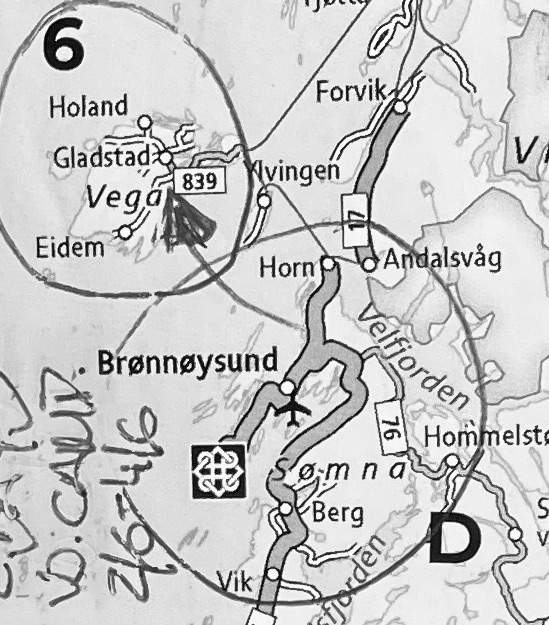
    Vega Islands, Norway— near the Artic Circle, it was our first wild camping (with benefits!) in Norway.


    Final Thoughts

    Some journeys teach you about the world. Others teach you about yourself. This one, I believe, did both. The north called to us, we answered, and somewhere between the fjords and the endless summer light, we learned that perhaps the greatest discoveries aren’t found on any map—they’re found in recognising what truly moves us, and what simply impresses us.

    Until the next adventure – Safe hikes!

    e.

    If you missed the first part of our Nordic Trip, you can read it here.

  • New Short Video:               Denmark’s West Coast

    New Short Video: Denmark’s West Coast

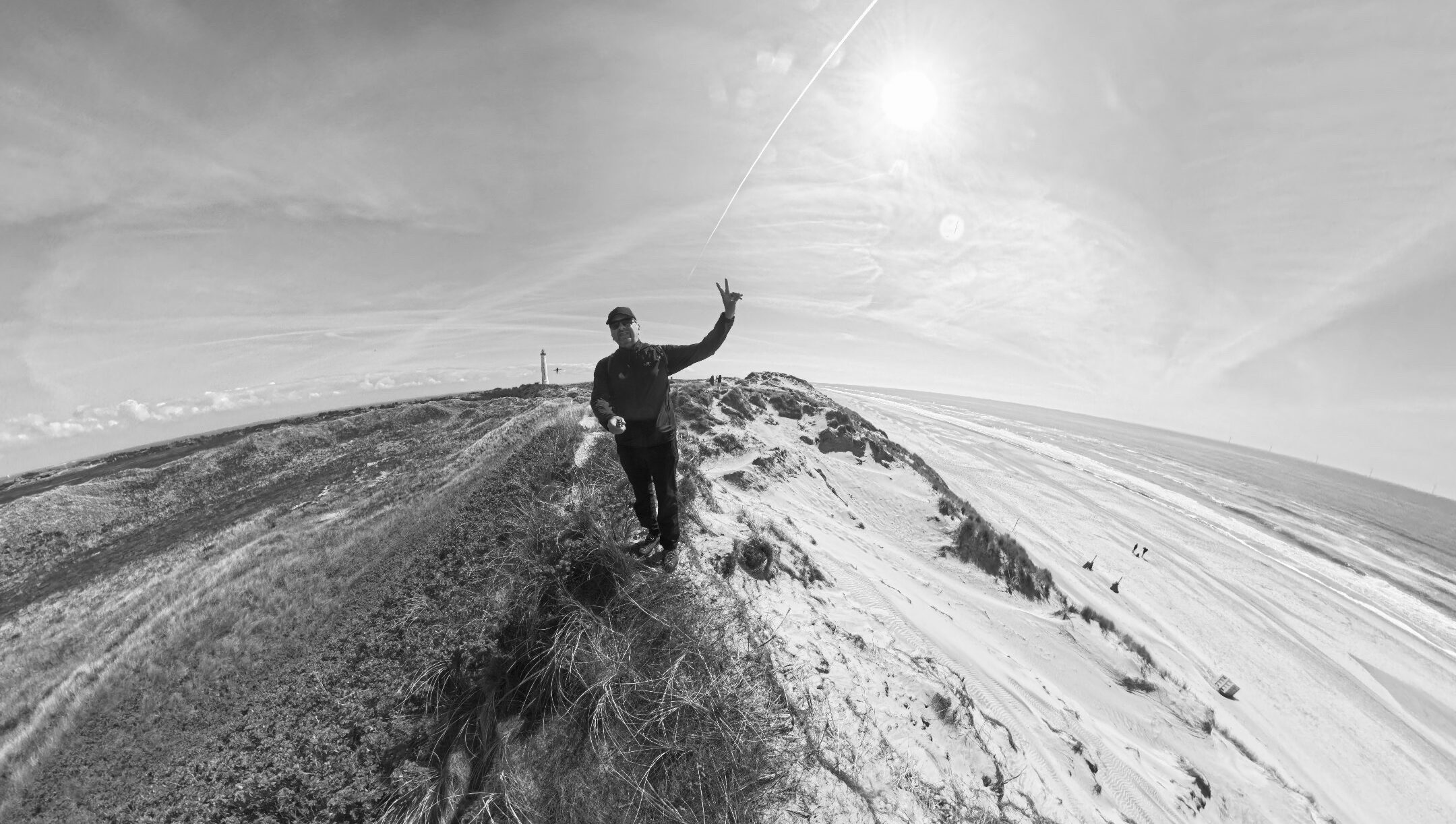
    From the Scandinavian coast—this stretch near Lemvig speaks for itself:

    Howling winds, deserted horizons, the kind of solitude that reminds you to seize the moment.

    Carpe diem.
    e.

    Watch Me!

  • Road Trip Journal:                        The Seven-Week Nordic Odyssey (Part 1)                             The First Attempt

    Road Trip Journal: The Seven-Week Nordic Odyssey (Part 1) The First Attempt

    So, we finally did it. After years of planning, we packed the car, strapped a tent to the roof, and pointed our headlights north. Our goal? A seven-week epic from Austria to Tromsø, Norway.

    The grand plan was ambitious: traverse northern Germany, hug the east coast of Denmark, catch a ferry across the Skagerrak, and drive deep into the Norwegian Arctic. Once we reached Tromsø, the script would flip. “Team B” would take the wheel for the final leg, while we flew back to our home base in Tirol.

    But as any seasoned traveller knows, the map is rarely the territory. This is Part 1: The First Attempt. Spoiler alert: It didn’t go exactly to plan.

    The Gear: Survival of the Fittest (and Coziest)

    We weren’t just winging it. For a seven-week stint in the Nordic chill, our setup had to be bulletproof. We stripped the car down to essentials, prioritising warmth and efficiency:

    • The Shelter: An easy-pitch tent (because nobody wants to wrestle with poles in the rain).
    • Sleep System: Winter-grade sleeping bags paired with inflatable cushions and camping bed frames. No cold ground for us.
    • The Kitchen: Full cooking facilities and a portable fridge to keep the provisions fresh.
    • The Secret Weapon: Meal prepping. To save time and sanity, we organised two menus a day and bagged all ingredients into seven separate, sealed packs—one for each week. Breakfast, lunch, dinner, sorted.

    The Road: Rivers, Sheep, and Lighthouses

    Our first night was a warm-up in Germany, pitching up beside a river. The facilities were spotless, the vibe serene, and the location perfect. We liked it immediately.

    As we pushed north, the scenery shifted. The rolling hills gave way to the hypnotic, flat expanses of Denmark. We encountered long stretches of road with no curves and almost no traffic—a driver’s dream. But the real stars of the show were the locals: the sheep. We saw more sheep in a week than most people see in a lifetime. And yes, the lighthouses were everywhere, standing sentinel along the coast like silent guardians.

    Denmark: Wind, Wit, and Welcome

    Crossing into Denmark brought a few specific lessons for the uninitiated:

    • Dress Code: Bring appropriate clothes. It’s a flat country, which means it’s also a very windy country.
    • Language: Don’t panic if you don’t speak Danish. You can navigate the entire country speaking German or English with ease.
    • The People: Friendly, attentive, and helpful. Whether in stores, supermarkets, or at the campsites, the Danish hospitality was a highlight.

    The Bitter Truth

    Then came the call.

    On our second week, just as we were finding our rhythm, my doctor rang. My monitored condition required my immediate attention back in Austria. The dream of reaching Tromsø in one go had to be paused.

    It was a bitter pill to swallow. We packed up the tent, folded the camping beds, and turned the car around. The freedom of the road clashed violently with the reality of health. But life goes on. We aren’t giving up; we’re just hitting pause. We’re heading back to Austria to sort things out, with the intention of picking up the thread in one week.

    The journey isn’t over; it’s just entering a new chapter.

    Coming Up: More on the return leg, the medical detour, and how we plan to finish the job in Part 2.

    Want to see the sheep, the lighthouses, and the campsites? Check out the photos on my Instagram.

    Safe travels, and keep the wheels turning.

  • The Donkey Palio: A Madcap Adventure You Won’t Believe

    The Palio dei Somari: Where Donkeys Steal the Show

    Since 1966, Torrita di Siena has been celebrating its Palio dei Somari—a festival that puts Saint Joseph (patron of carpenters) and his humble donkey companion centre stage. Born to honour both toil and simplicity, the event sees the town’s eight contrade battling for a painted banner on St Joseph’s feast day.

    Each district—Porta a Pago, Porta a Sole, Porta Gavina, Porta Nova, Le Fonti, Stazione, Refenero, and Cavone—sports its own colours, crest, and spot-on 15th-century garb. It’s Siena’s famous contrada rivalry, but with a donkey twist and a whole lot of character.

    Source: torritadisienaliving.it

    One Last Lap: The Palio dei Somari on my channel