Tag: nomadic life

  • Work Independent Location = Freedom (and don’t let anyone tell you different)

    Work Independent Location = Freedom (and don’t let anyone tell you different)

    Right then. Let’s get straight into it, shall we?

    Since I stopped making my bosses rich – you know the ones – paying for their goddamn mansions, yachts, bling-bling and fucking supercars – my life changed radically. Like, proper radically. Not the “let’s have a glass of wine after work” kind of radical. The “I’m actually living my fucking life” kind of radical.

    And here’s the truth nobody wants to tell you: the 9-to-5 job isn’t a ladder. It’s a trap. A fucking golden cage where you trade your sweat and blood for someone else’s mortgage, their kids’ private school fees, their next holiday to the Maldives while you’re counting pennies for the train fare to see your mum.

    What the Hell did I Lose by Leaving?

    Nothing. Absolutely nothing worth keeping.

    No agendas – written or otherwise.
    No more rat race – waking up at 6am for a commute that feels like a death sentence.
    No more useless meetings where you discuss scheduling another meeting to discuss the last meeting.
    No more micromanagement telling you how long your bathroom breaks should be.
    No more fake colleagues who’ll talk absolute shite behind your back while licking the boss’s arse in meetings. You know them. We’ve all had to deal with them. They’re everywhere.

    The Truth About Freedom

    Now? I can work from anywhere. Anytime. Whenever I bloody well want.

    Wake up at 11? Fine. Work till midnight on Tuesday because the vibe’s right? Perfect. Want to take three days off to visit Iceland just because? Fuck yes. Nobody’s watching. Nobody’s caring. Nobody giving me a guilt trip about “team culture.”

    Because here’s the thing they don’t advertise in those glossy recruitment brochures: your time is YOUR TIME. Not a company asset. Not quarterly productivity metrics. Not shareholder returns. Yours.

    So, Where to Start If You Are Still Stuck?

    Move your ass. Literally. Research the hell out of it. Look up independent work ideas. Learn about working from home. Look into what everyone’s banging on about now: digital nomad. Whatever you call it, it’s real, it’s happening, and it’s available if you’re willing to put in the effort.

    To give you a few concrete examples – yeah, I learned quite a few languages along the way – so, translation work keeps the lights on. Video editing? Same. Subtitles? Yep. Online courses? Right on! When you ready, passive income is the key. And don’t put all the eggs in one basket; use various platforms. All of these together put the bread and the butter on my table. No bullshit. Just actual work that pays actual money.

    It took time to figure it out. Had some shitty months early doors. But now? Now I’m actually free. And it’s the best decision I ever made.

    Get Organised and Fire your Boss

    Seriously. Get your fucking ass organised. Make a plan. Start building the skills that mean you control the income stream, not some middle manager who thinks sending a passive-aggressive Slack message is leadership.

    The world doesn’t owe you a stable job anymore. But it does owe you opportunity if you’re prepared to grab it with both hands and stop waiting for permission.

    Stop letting someone else live like a king while you struggle to pay rent. Stop pretending you don’t hate every minute of your day. Stop accepting the narrative that this is just “how things are.”

    They’re not. You can change them.

    Get your own business running. Build your own client base. Create your own schedule. Live your own damn life. On your own terms!

    Freedom’s out there. You just have to bloody well take it.


    Drop the corporate leash. Your life, your rules. 🖤

    Success!

    e.

  • Minimalism VS Essentialism: Two Roads Through the Chaos

    Minimalism VS Essentialism: Two Roads Through the Chaos

    Let’s cut through the bullshit right from the start. Both minimalism and essentialism have been co-opted, diluted, and sold back to you as lifestyle brands. Instagram influencers peddle them. Tech bros quote them while sipping €12 lattes. But stripped of the marketing gloss? These are real, raw philosophies for navigating a world that’d rather sell you stuff than give you answers.

    So what’s the difference? Which one cuts deeper? And more importantly—which one might actually save your sanity?

    What Is Minimalism? (And What It Isn’t)

    At its core, minimalism is about removing the excess. Material clutter. Mental noise. Obligations that drain you. It’s choosing less so you can focus on what actually matters.

    But here’s what minimalism is NOT:
    ✗ Living in an empty white box staring at a blank wall
    ✗ Being poor or embracing austerity as punishment
    ✗ Judging everyone who owns more than three t-shirts

    Minimalism isn’t about poverty—it’s about intentionality. About knowing what deserves space in your life and what deserves to be shown the door.

    What Is Essentialism? (And What It Bloody Well Isn’t)

    Essentialism is the philosophy that there is always a better way—but only if you ruthlessly prioritise what’s truly vital. It’s not about doing less for the sake of it. It’s about doing the right things. Essentialism asks: “Is this absolutely necessary? Does this serve my core purpose?”

    Here’s what essentialism is NOT:
    ✗ Simply saying “no” to everything
    ✗ Perfectionism disguised as productivity
    ✗ Another productivity hack for grinding harder

    Essentialism isn’t subtraction alone—it’s strategic elimination. Strip everything away until only the essentials remain, then pour your energy there.


    The Core Differences: Clash of the Philosophical Twins

    AspectMinimalismEssentialism
    Primary FocusExternal environment & possessionsDecisions, priorities, and choices
    Question It Asks“Do I need this?”“Is this the most important thing I could be doing?”
    Approach to LifeReduce, simplify, curateEvaluate, eliminate, focus
    View on FreedomFreedom FROM clutterFreedom TO invest deeply in what matters
    EnemyConsumption, accumulationMediocrity, overcommitment

    One strips the noise. The other forces you to ask whether what remains actually serves you.


    Pros & Cons: Let’s Get Honest

    Minimalism

    PROS:

    • Less stress, more clarity (fewer decisions to make)
    • Financial breathing room
    • Environmental bonus (you consume less)

    CONS:

    • Can slide into consumerism lite (buying expensive durable/functional gear)
    • Risk of emotional suppression (what about memories?)
    • Privilege blind spot (not everyone can afford to declutter)

    Essentialism

    PROS:

    • Sharpens decision-making laser-like
    • Creates meaningful depth instead of shallow breadth
    • Builds discipline around what truly moves the needle

    CONS:

    • Can become obsession with “optimising” everything
    • Risk of analysing paralysis (“is this THE essential choice?”)
    • May alienate others who don’t share your priorities

    What They Are Together (Or Aren’t)

    Both reject capitalism’s hollow promise: Buy this and do this and achieve this and you’ll be happy.

    But neither is a silver bullet. You can be a minimalist who’s still scattered. You can be an essentialist drowning in the wrong commitments. The magic happens when you interrogate both—and decide what fits YOUR truth.


    My Turn in the Spotlight

    2019 is when I went full minimalist. Not because some “influencer” pitched it to me. Because my health flipped my life upside down and left me scrambling to figure out how to live one damn day at a time.

    Truth is, I thought I was already minimalist. Moved to London, cut the anchors, hit the road as a nomad years before “digital nomad” became a fucking TikTok buzzword and got sold by “expert influencers” selling courses to people chasing aesthetics. Fuck all that noise.

    Health forced my hand. The rest? Old news.


    Where To Go Deeper

    If you’re serious about digging beneath the surface, here’s where I point folks:

    • Adbusters – Anti-consumerism, always punk
    • The Minimalists – More practical than philosophical, but useful
    • BBC In Our Time – Essentialism – Great audio deep dives

    And hey—if you’re into visuals with substance, check out MaggiFuchs. I contribute there too, so you reading this are advised. Nothing fancy, just honest conversations about life’s bigger messes.


    Your Turn

    This isn’t a lecture—it’s an invitation to fight back against the noise, however you choose. Maybe it’s stripping down possessions. Maybe it’s carving meaning from chaos. Maybe it’s both. Maybe it’s neither.

    Drop your take. I want your rants, your theories, your contradictions. Email me at viaminimal@gmail.com—all enquiries welcome.

    What’s your stance on Minimalism vs Essentialism? Which one’s got you, or is it time to grab the leash back?


    Stay free. Stay thinking. Stay alive.

    e.

  • The Camino Deception: An Unfiltered Hiker’s Perspective

    The Camino Deception: An Unfiltered Hiker’s Perspective

    By me — No sponsors. No strings attached. Just the raw truth.


    Introduction: A Contrarian Takes the Path

    You’ll find countless glowing articles about the Camino de Santiago. Picturesque sunsets, spiritual transformations, profound friendships. It’s everywhere on social media and in travel blogs. But what happens when someone walks this legendary trail and finds… well, something else entirely?

    That’s the story I’m here to share. This article will be a contrast to all other Camino pieces out there. And that’s the real truth. No filters. No sponsored partnerships. Just honest opinions. Be prepared to agree to disagree.


    Who Am I? Why Was I Even There?

    Before diving into the journey itself, let me establish credibility—and motivation.

    I walked the “Pagan Route” from Saint-Jean-Pied-de-Port all the way to Finisterre. I’m an experienced hiker and climber, a member of the Alpine Club in Austria, and I’ve trekked across several countries on multiple continents. I’m not religious. I simply love hiking.

    The Camino became my choice primarily because of the infrastructure and the promise of bonding with fellow hikers—a camaraderie I’d already experienced in European mountain huts and other international hiking communities. What awaited me, however, was quite different from what I expected.


    Week One: The Disillusionment Begins

    The frustration of being deceived by all the literature and media content about the Camino started becoming painfully obvious by the end of the first week.

    Let’s talk about people. Inconsiderate people. Egoistic behavior. A startling lack of sympathy. There were nearly physical fights in dorms because someone wanted windows open while another wanted them closed. I never experienced such behaviours before.

    Common areas were disgusting. We’re talking filthy kitchens, rubbish everywhere and biohazard-level conditions in toilets and showers.

    Where is the magic? Where is the camaraderie? Where are the good manners of these people who call themselves “pilgrims”? Shouldn’t we all be in tune since we’re literally in the same boat?


    Week Two: At the Breaking Point

    By the second week—near Puente de La Reina—I was seriously considering my options. Frankly, I was about to throw in the towel.

    This is not fun. At all.

    I started looking for other hiking trails further south in Spain just to salvage my hiking adventure. The Camino route has nothing to do with the Spain I know, respect, and love. Note that I lived in Spain for more than ten years and traveled the whole country during that period. So I know what I’m talking about.

    In short: the main routes of the Camino de Santiago do not reflect the Spanish culture. Far from that. It’s somewhat of a tourist trap—like the Everest tours—fueled by greedy business owners, “influencers,” and “Camino experts” whom I suspect distribute carefully curated, paid content instead of the truth.

    To prove my suspicions; try making any realistic comment about the Camino in any media channel, and you get labeled a “hater.” Or you encounter silence when asking genuine questions.


    The Accommodation Reality Check

    So I decided on a new strategy: spend more money and book only private albergues. But before I continue, let me clarify this crucial point:

    Not all public albergues were bad. Not all private albergues were bad. All the “donativo” (donation-based) albergues were good, as well as those run by the church (mostly). Keep that in mind if you’re planning your pilgrimage.

    Unfortunately, the available private albergues on my route were often disasters: filthy, unfriendly hosts, packed to capacity. Imagine your bedroom with five bunk beds stacked next to each other, one window, one shower, one toilet for everyone.

    One particularly tragicomic situation occurred in a private albergue where the coffee for breakfast (sold separately) had been made the night before, and you were given a microwave to reheat it. Luckily, I always bring a small moka pot.

    And the hope that the next place would be better than the last? That never materialised.


    Changing Goals: From Adventure to Challenge

    With no desire to give up on my original plans, I changed the goal instead. From this point forward, this wasn’t a long-distance hiking adventure anymore—it was a challenge.

    I needed to reach Finisterre, no matter what.

    After a whirlwind of inconsiderate people, subpar accommodations, sleep deprivation, and a few (very few, to be honest) nice moments, I finally arrived at Finisterre. And I did appreciate the sunset at Kilometer 0, right next to the lighthouse. Mission accomplished!


    What Worked: The Bright Spots

    Despite the chaos, there were moments worth cherishing:

    Standout Stays

    • Casa Rural La Alpargatería – Villafranca Montes de Oca: Best private albergue: kind, attentive host. Amazing bedroom with scented bed linens, two kitchen areas, fewer rooms = less crowding. Kind host.
    • Hostal Plaza Mayor – Carrion de Los Condes: Clean, comfy and well-kept. Very friendly host.
    • Albergue de Peregrinos de Atapuerca –Nice one! Take the opportunity to visit the archaeological site of Atapuerca.
    • Espíritu Xacobeo Municipal – O Pedrouzo. The kind and super attentive host reserved a private space for us. Also offered a free ride to supermarket. The place is clean, well organised and comfortable.
    • Donativo/Church-run albergues – Consistently better experience throughout the route

    Human Connections

    I made new hiking-friends from Italy, Canada, China, Austria, and Spain. I still keep in touch with some of them. These genuine connections remind us that individuals, not systems, carry the soul of any journey.


    What Didn’t Work: The Pain Points

    Here’s an honest inventory of what frustrated me most:

    Pilgrim Behavior Issues

    • Arrogance: Why bother walking the Camino when you’re not doing good or respecting others?
    • The Bed Race: Inconsiderate people wake at 5 AM, rush to the next albergue to sleep all day. When I arrive – around 14:00—then they call me inconsiderate for making noise (in the afternoon!).
    • Lack of Privacy: Particularly problematic for women in dorms.
    • Disruptive Behavior: Adults acting like bratty kids during silent times, every day, everywhere. I wonder if they behave like that back home.
    • Noise Pollution: Loud people. Very loud people. And people blasting music from speakers attached to their backpacks.
    • Dormitory Nightmares: Loud talking, overcrowded rooms, no airflow, rocking bunks, inconsiderate “pilgrims”waking the whole room at 5:00 AM and also packing in the middle of the night.

    Infrastructure Failures

    • Insufficient Rest Areas: Too few, abandoned, filthy, incomplete.
    • Registration Overload: Why not one unified system?
    • Toilets: Often unavailable along the way.
    • Food Monotony: Same dishes in every village. And expensive.
    • Cash Machine Fees: High charges; go to a bank instead.
    • Cyclists & Bikers: Watch out—they’re everywhere on shared paths.

    Cultural Friction

    • People expect locals to speak their language rather than attempting Spanish.
    • Arrogant attitudes that contradict the humility supposedly inherent in pilgrimage.

    Final Thoughts

    Maybe the Camino isn’t for me. I’m an experienced mountain hiker—not originally a long-distance walker (well, now I am that too). Walking through dirty flatlands, loud people, crowded cities, and alongside motorways was quite uninteresting for me personally.

    Do I Recommend It?

    Not really.

    The extreme low cost-benefit ratio makes it hard to endorse. I would definitely never do it again. There are nicer places to go with more compatible people to share the journey with.

    My Honest Recommendation

    Walk a week before deciding what you think. Firsthand experiences speaks louder than any secondhand opinion—even if yours differs from mine. If possible, skip the Sarria-to-Santiago section—it was the crapiest part of my Camino. You’ll encounter many casual hikers rushing those final 100km just to earn the certificate for social media.

    This video resumes it all.

    Anyway, safe hikes.
    e.


  • Road Trip Journal: The Seven-Week Nordic Odyssey – Part 2

    Road Trip Journal: The Seven-Week Nordic Odyssey – Part 2

    A Journey North Begins (again!)

    After two weeks back in Tirol, we were ready to re-start our trip to Tromsø. But to compensate we’d have to quicken our pace to reclaim those lost days.

    The Road Through Central Europe

    Our journey commenced with a brief pause in Germany, at the quiet town of Nörten-Hardenberg—a perfect stepping stone before crossing into Scandinavia.

    Next came Denmark. We chose Aalborg as our Danish waypoint, allowing ourselves a moment to breathe before the sea crossing that would carry us onto Norwegian soil.

    Into the Land of Fjords – (Some) Places We Passed Through

    From Hirtshals, the ferry departed for Kristiansand, marking our official entry into Norway proper. What followed was a whirlwind of coastal highways and mountain passes: Lyngdal, Lindum, Eidfjord, Hemsedal, Dovre, and Langnes each offering their own slice of Nordic wilderness.

    Then came (one of many) maritime leg that defines much of northern Norway: a ferry traversing Bodø–Røst–Værøy–Moskenes, before finally reaching our ultimate destination—Tromsø.


    Perhaps a contrarian take: Norway’s beauty is so relentless that it loops back into repetition.

    Let me explain…

    When you traverse thousands of kilometres in such compressed time, you inevitably encounter fjord after fjord, waterfall after waterfall, red house after red house Each magnificent. Each worthy. But after a while, even perfection wears thin.

    What I learned in this trip had nothing to do with Norway. Everything to do with me: staying longer in one place beats one night stays.

    The Midnight Sun Paradox

    The midnight sun is undeniably magical—until it sabotages your circadian rhythm entirely.

    Time itself seemed to dissolve. I’d awaken, greet the bright, unrelenting sunshine, congratulate myself on a solid night’s rest, only to discover merely two or three hours had passed by. It turns out I do not enjoy daylight only; I require the night as well.

    Those who call this land home, enduring months of unbroken light followed by months of profound darkness, command my utmost respect.

    Chasing Quietude Over Crowds

    In enjoy the most the quieter corners of any landscape.

    In Denmark, guidebooks insisted the eastern side housed the essential attractions. Because of that we drove west instead.

    Norway presented a similar revelation. We began along the classic touristic routes but quickle grew weary of them. So we detoured into silence. Again.

    Wild Camping Triumphs

    To name standout favourites from both countries, I must acknowledge our wild camping experiences. We stumbled upon facilities equipped with toilets and shelter in the absolute middle of nowhere—and they were immaculate. A stark contrast to our encounters on the Camino de Santiago—but that, dear reader, is a tale for another article and another occasion.

    The Skagerrak Strait, Denmark — a part of the North Sea, and the Kattegat, which connects to the Baltic Sea, converge at this location.

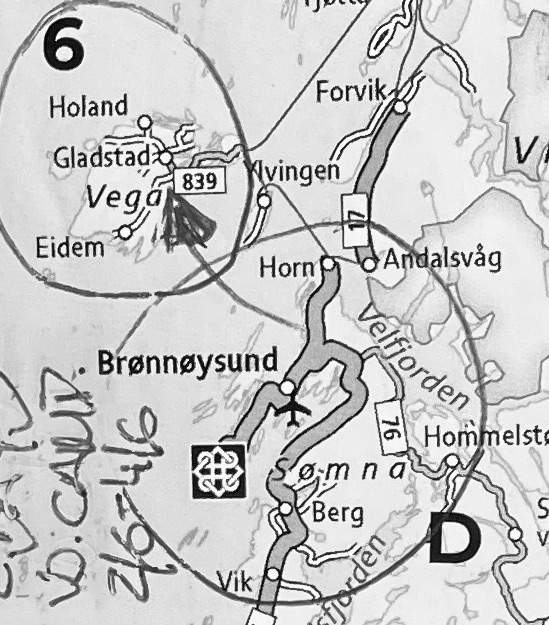
    Vega Islands, Norway— near the Artic Circle, it was our first wild camping (with benefits!) in Norway.


    Final Thoughts

    Some journeys teach you about the world. Others teach you about yourself. This one, I believe, did both. The north called to us, we answered, and somewhere between the fjords and the endless summer light, we learned that perhaps the greatest discoveries aren’t found on any map—they’re found in recognising what truly moves us, and what simply impresses us.

    Until the next adventure – Safe hikes!

    e.

    If you missed the first part of our Nordic Trip, you can read it here.

  • New Short Video:               Denmark’s West Coast

    New Short Video: Denmark’s West Coast

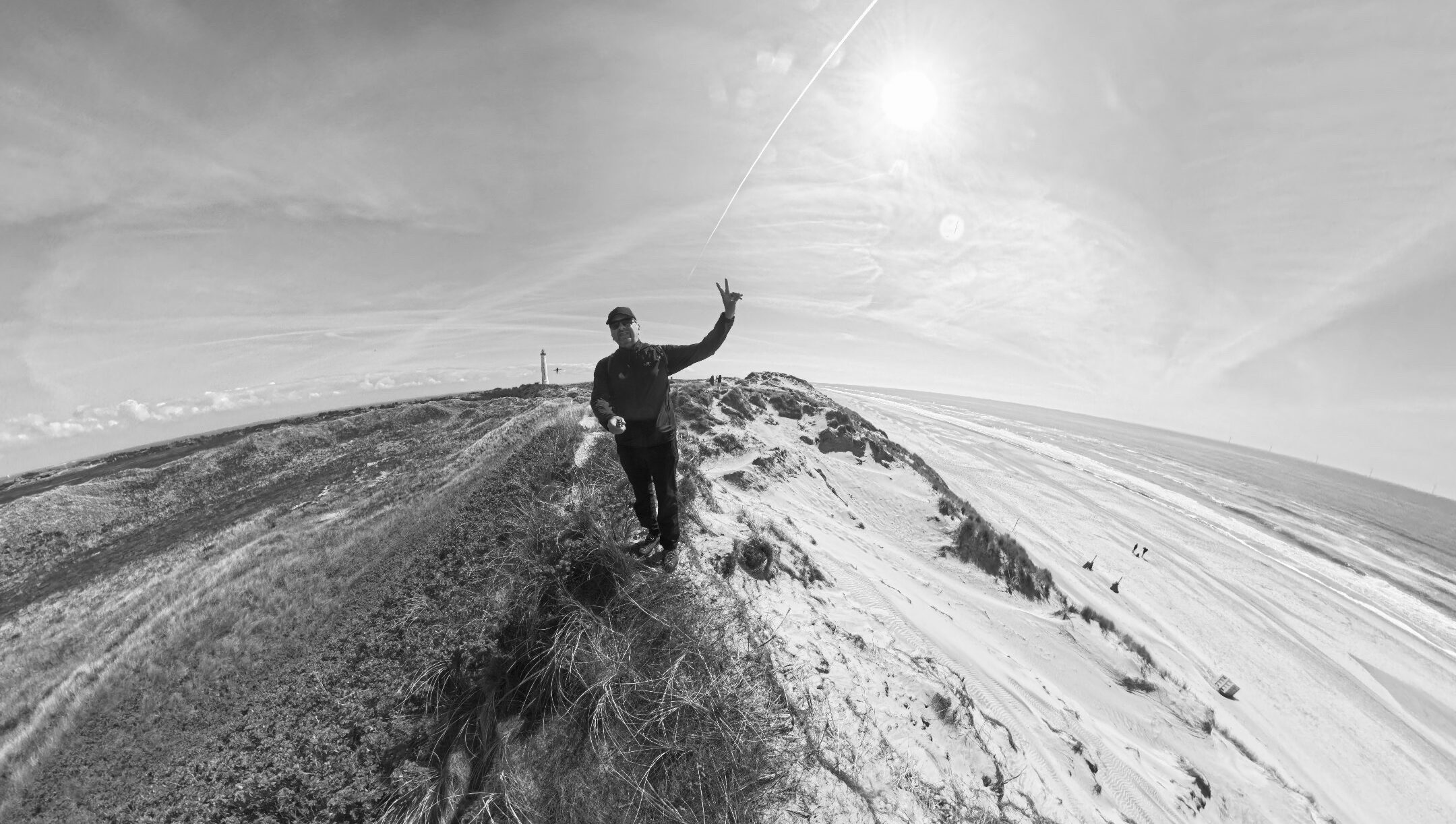
    From the Scandinavian coast—this stretch near Lemvig speaks for itself:

    Howling winds, deserted horizons, the kind of solitude that reminds you to seize the moment.

    Carpe diem.
    e.

    Watch Me!

  • The Cartography of Nothing:  Mapping a Life Without Borders

    The Architecture of Less

    For years, I dreamed of a life unbound by geography—a existence defined by movement, not an address. But let’s be honest: freedom isn’t cheap, and it certainly isn’t easy to fund while paying rent on an empty flat. So, I did the only logical thing: I liquidated my entire existence.

    Collect Memories, Not Things

    I had long considered myself a minimalist, well before this lifestyle became a curated social media trend. Yet, despite that mindset, I discovered that getting rid of everything you own is far harder than simply boxing it up and moving to a new place (in my case; no place)

    Dare To Be Different

    The 2019 transition wasn’t without tremors. As usual, my “family” offered zero support, entrenched in their conservative modus vivendi. – I wear the ‘black sheep’ badge with pride. Why adhere to the prescribed linear march? Corporate drudgery, a flashy car, a beachside flat, offspring. I harbour no judgment for those who find fulfilment in that script, but it was never mapped for my feet. My compass points elsewhere: no borders, new customs, acquiring cultural depth. Money is a tool, not a trophy. Vanity? Abandoned long ago.

    Nine-to-Five? Hard Pass

    I have no desire to fund a boss’s luxury fleet or endure petty micromanagement from “work mates”. Now, I dictate my own priorities. Minimalism, coupled with location-independent work and house-sitting, dissolved the rigid structures of calendar days, weekends, and fixed hours into irrelevance.

    The Fine Print of Fate

    A word of counsel for those eyeing the leap: invest in quality, not quantity. Ignore the frenzied consumerism of Black Friday; buy functional, enduring items. And boycott the monolithic convenience of online stores in favour of local, (in my case) European commerce. To me, the hyper-consumerist USA-model was always hardly a template worth following.

    This is my perspective. But be careful what you wish for: you might just like it.

    Yours in freedom,
    e.