
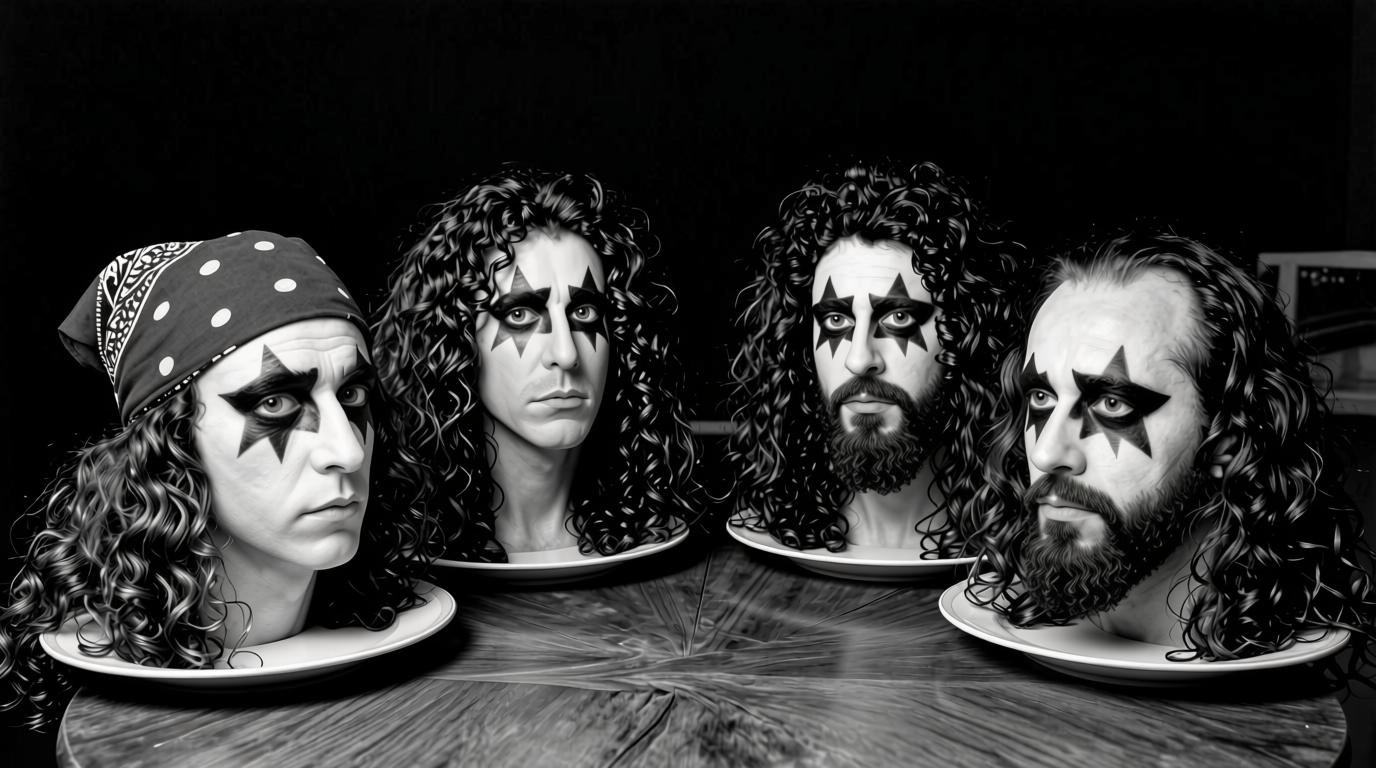
Secos & Molhados: The Glitter, The Guile, and The Greatest Flash-in-the-Pan Brazil Ever Produced
Some bands burn out. Some fade away. And then there are the ones that detonate like a firework in a dictatorship — bright, brief, and impossible to unsee. Secos & Molhados were the third kind.
Formed in São Paulo in 1971, right in the teeth of Brazil’s military regime, they were the band that turned their rock mix of folk and prog into a political act without ever handing you a manifesto. They wore face paint, stacked heels, and more eyeliner than a Soho pub crawl, and they did it all whilst fusing MPB, fado, folk, psychedelia, and progressive rock into something nobody had quite heard before — or since.
They released two era-defining albums, imploded, and left a crater in Brazilian pop culture that still echoes. That’s not a failure. That’s punk before punk had a name for itself.
The Members
The classic lineup — the one that mattered — was a power trio with a supporting cast:
- João Ricardo — founder, main songwriter, acoustic guitarist, and harmonica player. The brains of the operation. He formed the band, wrote most of the songs, and was the only member who stuck around after the first two records. Some people start bands; João Ricardo started a religion with a three-year shelf life.
- Ney Matogrosso — vocalist, provocateur, force of nature. The man whose falsetto could shatter glass and whose androgynous stage presence made Bowie look almost understated. He wasn’t just a singer; he was a walking scandal in a country governed by generals. After the band split, he became one of the biggest solo artists in Brazilian history.
- Gerson Conrad — vocalist, composer, and second guitarist. The quiet engine of the trio, who co-wrote and co-sang alongside Matogrosso before stepping out of the spotlight post-breakup.
Backing them up were a rotating crew of session hands and guest musicians: John Flavin (guitar), Willy Verdaguer (bass), Marcelo Frias (drums), Sergio Rosadas (flute), plus a special appearance from Zé Rodrix lending pipe organ to the debut.
From 1974 onward, João Ricardo was the sole constant. Various musicians cycled through the later records, but the magic was always the original trio. Nobody pretends otherwise.
Discography
Six studio albums. Two masterpieces. Four curiosities. Here’s the lot:
| Year | Album | Label |
|---|---|---|
| 1973 | Secos & Molhados | MCA |
| 1974 | Secos & Molhados II | Continental |
| 1978 | Secos & Molhados III | Philips |
| 1980 | Secos & Molhados IV | Philips |
| 1988 | A Volta do Gato Preto | Disco Ban / Polygram |
| 1999 | Teatro? | JR |
The debut and its sequel are the holy texts. Everything after 1974 is João Ricardo carrying the flame — sometimes brilliantly, sometimes unevenly, but always stubbornly. Calling every album Secos & Molhados for the first four was either the laziest branding in rock history or the most arrogant. Either way, it’s perfect.
There are also live albums, EPs, and numerous compilations floating around — the most notable being O Melhor de Secos & Molhados, which is exactly what it says on the tin and the ideal starting point for newcomers.
Influences
Strip back the glitter and you’ll find a frankly bonkers stew of source material:
- Glam rock — David Bowie and Marc Bolan’s T. Rex were the lodestars. The androgyny, the theatricality, the sheer don’t-give-a-damn of it all came straight from the Ziggy Stardust / Electric Warrior playbook.
- Tropicália — Os Mutantes blazed the trail for Brazilian psychedelic rock, and Secos & Molhados walked straight down it, albeit in higher heels.
- MPB and fado — Brazilian Popular Music and Portuguese folk traditions gave the band a harmonic and melodic vocabulary that British or American glam acts simply didn’t have. The fado influence is particularly audible in the mournful, minor-key ballads.
- Experimental, prog and folk music — The band’s stated manifesto was to be open to everything: Latin rhythms, Portuguese folklore, psychedelia, hard rock. They meant it.
The result was something that sounded like Bowie at Carnival — and that’s not a comparison you can apply to many acts.
Similar Bands Around the World
If Secos & Molhados are your gateway drug, here’s where to go next:
In Brazil:
- Os Mutantes — The godparents of Brazilian psych-rock. If you haven’t heard them, start with their 1968 self-titled debut and work forward.
- Casa das Máquinas — Rougher, more hard-rock-oriented, but cut from the same 70s Brazilian rock cloth.
Around the world:
- David Bowie — The obvious touchstone. Early-70s Bowie — Ziggy Stardust, Aladdin Sane — is the closest spiritual relative.
- T. Rex — For the strut, the riffs, and the belief that pop music could be both ridiculous and profound.
- Slade — For the unabashed, stomping, face-painted rock nonsense that somehow becomes immortal.
Five Essential Songs
Start here. Then disappear down the rabbit hole.
1. Sangue Latino
The opener of the debut album and arguably the band’s signature song.
2. O Vira
A traditional Portuguese folk dance reimagined as glam rock thunder.
3. Rosa de Hiroshima
The centrepiece. Based on a poem by Vinicius de Moraes about the victims of Hiroshima, this is Secos & Molhados at their most haunting and humane. Listen to it here: Rosa de Hiroshima — YouTube
4. Flores Astrais
The standout of the second album. Psychedelic, hypnotic, and gorgeous.
5. Amor
Short, sweet, and sneering in equal measure.
The Aftermath
The original trio lasted barely two years. Two albums. Then Matogrosso walked, Conrad stepped back, and João Ricardo was left holding the name.
But here’s the thing: those two records sold over a million copies. In a military dictatorship. With a lead singer who performed in kaftans and makeup and sang in a register that made conservative Brazilians swallow their tongues. They headlined Carnegie Hall in 1974. They proved that Brazilian rock could be simultaneously experimental, commercial, and politically charged without lecturing anyone.
Ney Matogrosso went on to a legendary solo career that spanned decades and dozens of albums. João Ricardo kept the Secos & Molhados name alive through the 90s. Gerson Conrad largely withdrew from the limelight.
But for one blazing, glorious moment in the early 1970s, they were the most exciting band on the planet — and if you don’t believe me, go and put on Sangue Latino at full volume. You’ll hear it soon enough.
Leave a Reply