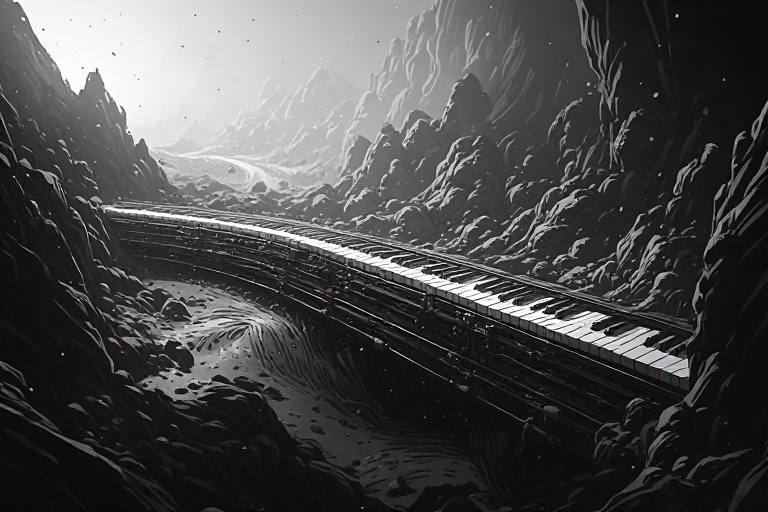
If you’re anything like me and constantly find yourself staring at a blank canvas (or screen, or wall, or life itself) wondering where the hell to begin, this book is worth keeping nearby. It’s not a how-to guide in the traditional sense, which is probably why it works so well.
Nannucci, as those in the know, has spent decades wrestling with questions that artists quietly ask themselves in the middle of the night: What comes before the work? Can starting point ever truly exist? The answers aren’t neat, and thank for that.
My one-line comment on Goodreads was “Visual freedom” – which sounds like lazy shorthand until you sit with this book for a bit. What Nannucci offers isn’t permission to do whatever you want (that’s too easy). It’s something sharper: a framework for thinking about beginnings without being paralysed by them. The text is spare, the images do the heavy lifting, and the whole thing moves with a quiet confidence that most art books lack.
I won’t pretend this is light reading. But it’s also not the kind of book that treats you like you need explaining. There’s an honesty to it – a refusal to oversell the process of creation or wrap it in inspirational bullshit. That alone earns respect.
For anyone working in visual arts, design, or just trying to make sense of their own practice, this sits comfortably on the shelf alongside the books that actually stay relevant.
Since I stopped making my bosses rich – you know the ones – paying for their goddamn mansions, yachts, bling-bling and fucking supercars – my life changed radically. Like, proper radically. Not the “let’s have a glass of wine after work” kind of radical. The “I’m actually living my fucking life” kind of radical.
And here’s the truth nobody wants to tell you: the 9-to-5 job isn’t a ladder. It’s a trap. A fucking golden cage where you trade your sweat and blood for someone else’s mortgage, their kids’ private school fees, their next holiday to the Maldives while you’re counting pennies for the train fare to see your mum.
What the Hell did I Lose by Leaving?
Nothing. Absolutely nothing worth keeping.
No agendas – written or otherwise. No more rat race – waking up at 6am for a commute that feels like a death sentence. No more useless meetings where you discuss scheduling another meeting to discuss the last meeting. No more micromanagement telling you how long your bathroom breaks should be. No more fake colleagues who’ll talk absolute shite behind your back while licking the boss’s arse in meetings. You know them. We’ve all had to deal with them. They’re everywhere.
The Truth About Freedom
Now? I can work from anywhere. Anytime. Whenever I bloody well want.
Wake up at 11? Fine. Work till midnight on Tuesday because the vibe’s right? Perfect. Want to take three days off to visit Iceland just because? Fuck yes. Nobody’s watching. Nobody’s caring. Nobody giving me a guilt trip about “team culture.”
Because here’s the thing they don’t advertise in those glossy recruitment brochures: your time is YOUR TIME. Not a company asset. Not quarterly productivity metrics. Not shareholder returns. Yours.
So, Where to Start If You Are Still Stuck?
Move your ass. Literally. Research the hell out of it. Look up independent work ideas. Learn about working from home. Look into what everyone’s banging on about now: digital nomad. Whatever you call it, it’s real, it’s happening, and it’s available if you’re willing to put in the effort.
To give you a few concrete examples – yeah, I learned quite a few languages along the way – so, translation work keeps the lights on. Video editing? Same. Subtitles? Yep. Online courses? Right on! When you ready, passive income is the key. And don’t put all the eggs in one basket; use various platforms. All of these together put the bread and the butter on my table. No bullshit. Just actual work that pays actual money.
It took time to figure it out. Had some shitty months early doors. But now? Now I’m actually free. And it’s the best decision I ever made.
Get Organised and Fire your Boss
Seriously. Get your fucking ass organised. Make a plan. Start building the skills that mean you control the income stream, not some middle manager who thinks sending a passive-aggressive Slack message is leadership.
The world doesn’t owe you a stable job anymore. But it does owe you opportunity if you’re prepared to grab it with both hands and stop waiting for permission.
Stop letting someone else live like a king while you struggle to pay rent. Stop pretending you don’t hate every minute of your day. Stop accepting the narrative that this is just “how things are.”
They’re not. You can change them.
Get your own business running. Build your own client base. Create your own schedule. Live your own damn life. On your own terms!
Freedom’s out there. You just have to bloody well take it.
Drop the corporate leash. Your life, your rules. 🖤
Prisoners of Geography: Ten Maps That Tell You Everything You Need to Know About Global Politics
A Little Tale of Maps and Masters
Imagine, if you will, a peculiar librarian who insists that every war, treaty, and trade deal was written not in ink, but in stone, river, and mountain range long before any politician ever drew breath. That, dear friend, is the charming premise of Tim Marshall’s Prisoners of Geography.
In essence: Nations aren’t shaped by ideology alone—they’re bound by their borders, terrain, and neighbours. Geography is the silent puppeteer pulling the strings of global power.
I must confess, I approached this book expecting dry cartography lectures. Instead, I found myself laughing aloud at Marshall’s wit—like when he describes Russia’s endless frustration with lacking warm-water ports (a geopolitical case of winter blues, indeed), or how China’s yellow rivers literally run through their foreign policy. Each chapter unfolds like a detective story, revealing why nations do what they do, not because leaders are brilliant or foolish, but because mountains don’t move and seas don’t shift.
Marshall writes with the precision of a cartographer and the charm of a storyteller who knows his secrets are better shared over tea than shouted from podiums. It’s the kind of book that makes you glance at your wall map with newfound respect—and perhaps a touch of suspicion.
A perfect companion for anyone who’s ever wondered why Pakistan and India remain locked in their Himalayan stare-down (to mention just one example).
Secos & Molhados: The Glitter, The Guile, and The Greatest Flash-in-the-Pan Brazil Ever Produced
Some bands burn out. Some fade away. And then there are the ones that detonate like a firework in a dictatorship — bright, brief, and impossible to unsee. Secos & Molhados were the third kind.
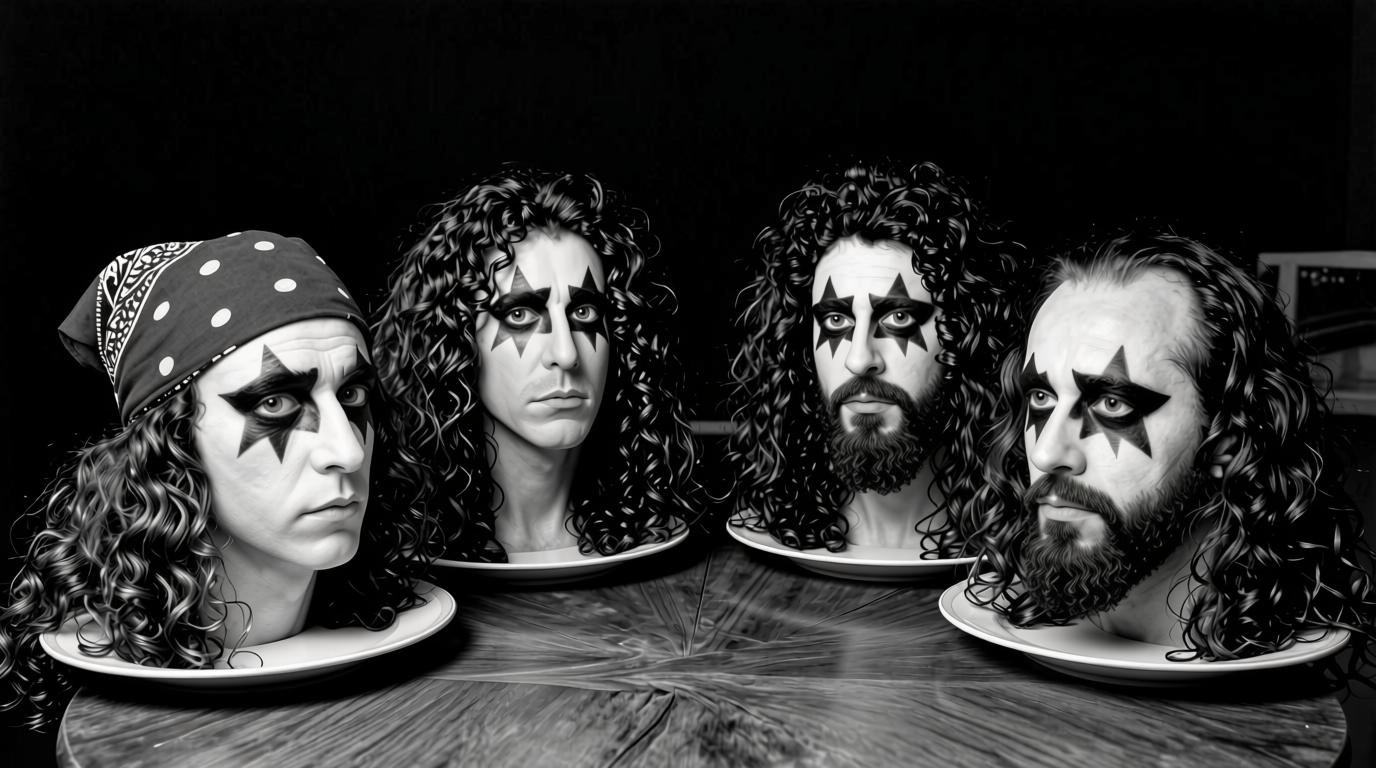
Formed in São Paulo in 1971, right in the teeth of Brazil’s military regime, they were the band that turned their rock mix of folk and prog into a political act without ever handing you a manifesto. They wore face paint, stacked heels, and more eyeliner than a Soho pub crawl, and they did it all whilst fusing MPB, fado, folk, psychedelia, and progressive rock into something nobody had quite heard before — or since.
They released two era-defining albums, imploded, and left a crater in Brazilian pop culture that still echoes. That’s not a failure. That’s punk before punk had a name for itself.
The Members
The classic lineup — the one that mattered — was a power trio with a supporting cast:
João Ricardo — founder, main songwriter, acoustic guitarist, and harmonica player. The brains of the operation. He formed the band, wrote most of the songs, and was the only member who stuck around after the first two records. Some people start bands; João Ricardo started a religion with a three-year shelf life.
Ney Matogrosso — vocalist, provocateur, force of nature. The man whose falsetto could shatter glass and whose androgynous stage presence made Bowie look almost understated. He wasn’t just a singer; he was a walking scandal in a country governed by generals. After the band split, he became one of the biggest solo artists in Brazilian history.
Gerson Conrad — vocalist, composer, and second guitarist. The quiet engine of the trio, who co-wrote and co-sang alongside Matogrosso before stepping out of the spotlight post-breakup.
Backing them up were a rotating crew of session hands and guest musicians: John Flavin (guitar), Willy Verdaguer (bass), Marcelo Frias (drums), Sergio Rosadas (flute), plus a special appearance from Zé Rodrix lending pipe organ to the debut.
From 1974 onward, João Ricardo was the sole constant. Various musicians cycled through the later records, but the magic was always the original trio. Nobody pretends otherwise.
Discography
Six studio albums. Two masterpieces. Four curiosities. Here’s the lot:
Year
Album
Label
1973
Secos & Molhados
MCA
1974
Secos & Molhados II
Continental
1978
Secos & Molhados III
Philips
1980
Secos & Molhados IV
Philips
1988
A Volta do Gato Preto
Disco Ban / Polygram
1999
Teatro?
JR
The debut and its sequel are the holy texts. Everything after 1974 is João Ricardo carrying the flame — sometimes brilliantly, sometimes unevenly, but always stubbornly. Calling every album Secos & Molhados for the first four was either the laziest branding in rock history or the most arrogant. Either way, it’s perfect.
There are also live albums, EPs, and numerous compilations floating around — the most notable being O Melhor de Secos & Molhados, which is exactly what it says on the tin and the ideal starting point for newcomers.
Influences
Strip back the glitter and you’ll find a frankly bonkers stew of source material:
Glam rock — David Bowie and Marc Bolan’s T. Rex were the lodestars. The androgyny, the theatricality, the sheer don’t-give-a-damn of it all came straight from the Ziggy Stardust / Electric Warrior playbook.
Tropicália — Os Mutantes blazed the trail for Brazilian psychedelic rock, and Secos & Molhados walked straight down it, albeit in higher heels.
MPB and fado — Brazilian Popular Music and Portuguese folk traditions gave the band a harmonic and melodic vocabulary that British or American glam acts simply didn’t have. The fado influence is particularly audible in the mournful, minor-key ballads.
Experimental, prog and folk music — The band’s stated manifesto was to be open to everything: Latin rhythms, Portuguese folklore, psychedelia, hard rock. They meant it.
The result was something that sounded like Bowie at Carnival — and that’s not a comparison you can apply to many acts.
Similar Bands Around the World
If Secos & Molhados are your gateway drug, here’s where to go next:
In Brazil:
Os Mutantes — The godparents of Brazilian psych-rock. If you haven’t heard them, start with their 1968 self-titled debut and work forward.
Casa das Máquinas — Rougher, more hard-rock-oriented, but cut from the same 70s Brazilian rock cloth.
Around the world:
David Bowie — The obvious touchstone. Early-70s Bowie — Ziggy Stardust, Aladdin Sane — is the closest spiritual relative.
T. Rex — For the strut, the riffs, and the belief that pop music could be both ridiculous and profound.
Slade — For the unabashed, stomping, face-painted rock nonsense that somehow becomes immortal.
Five Essential Songs
Start here. Then disappear down the rabbit hole.
1. Sangue Latino
The opener of the debut album and arguably the band’s signature song.
2. O Vira
A traditional Portuguese folk dance reimagined as glam rock thunder.
3. Rosa de Hiroshima
The centrepiece. Based on a poem by Vinicius de Moraes about the victims of Hiroshima, this is Secos & Molhados at their most haunting and humane. Listen to it here: Rosa de Hiroshima — YouTube
4. Flores Astrais
The standout of the second album. Psychedelic, hypnotic, and gorgeous.
5. Amor
Short, sweet, and sneering in equal measure.
The Aftermath
The original trio lasted barely two years. Two albums. Then Matogrosso walked, Conrad stepped back, and João Ricardo was left holding the name.
But here’s the thing: those two records sold over a million copies. In a military dictatorship. With a lead singer who performed in kaftans and makeup and sang in a register that made conservative Brazilians swallow their tongues. They headlined Carnegie Hall in 1974. They proved that Brazilian rock could be simultaneously experimental, commercial, and politically charged without lecturing anyone.
Ney Matogrosso went on to a legendary solo career that spanned decades and dozens of albums. João Ricardo kept the Secos & Molhados name alive through the 90s. Gerson Conrad largely withdrew from the limelight.
But for one blazing, glorious moment in the early 1970s, they were the most exciting band on the planet — and if you don’t believe me, go and put on Sangue Latino at full volume. You’ll hear it soon enough.
Let’s cut through the bullshit right from the start. Both minimalism and essentialism have been co-opted, diluted, and sold back to you as lifestyle brands. Instagram influencers peddle them. Tech bros quote them while sipping €12 lattes. But stripped of the marketing gloss? These are real, raw philosophies for navigating a world that’d rather sell you stuff than give you answers.
So what’s the difference? Which one cuts deeper? And more importantly—which one might actually save your sanity?
What Is Minimalism? (And What It Isn’t)
At its core, minimalism is about removing the excess. Material clutter. Mental noise. Obligations that drain you. It’s choosing less so you can focus on what actually matters.
But here’s what minimalism is NOT: ✗ Living in an empty white box staring at a blank wall ✗ Being poor or embracing austerity as punishment ✗ Judging everyone who owns more than three t-shirts
Minimalism isn’t about poverty—it’s about intentionality. About knowing what deserves space in your life and what deserves to be shown the door.
What Is Essentialism? (And What It Bloody Well Isn’t)
Essentialism is the philosophy that there is always a better way—but only if you ruthlessly prioritise what’s truly vital. It’s not about doing less for the sake of it. It’s about doing the right things. Essentialism asks: “Is this absolutely necessary? Does this serve my core purpose?”
Here’s what essentialism is NOT: ✗ Simply saying “no” to everything ✗ Perfectionism disguised as productivity ✗ Another productivity hack for grinding harder
Essentialism isn’t subtraction alone—it’s strategic elimination. Strip everything away until only the essentials remain, then pour your energy there.
The Core Differences: Clash of the Philosophical Twins
Aspect
Minimalism
Essentialism
Primary Focus
External environment & possessions
Decisions, priorities, and choices
Question It Asks
“Do I need this?”
“Is this the most important thing I could be doing?”
Approach to Life
Reduce, simplify, curate
Evaluate, eliminate, focus
View on Freedom
Freedom FROM clutter
Freedom TO invest deeply in what matters
Enemy
Consumption, accumulation
Mediocrity, overcommitment
One strips the noise. The other forces you to ask whether what remains actually serves you.
Pros & Cons: Let’s Get Honest
Minimalism
PROS:
Less stress, more clarity (fewer decisions to make)
Financial breathing room
Environmental bonus (you consume less)
CONS:
Can slide into consumerism lite (buying expensive durable/functional gear)
Risk of emotional suppression (what about memories?)
Privilege blind spot (not everyone can afford to declutter)
Essentialism
PROS:
Sharpens decision-making laser-like
Creates meaningful depth instead of shallow breadth
Builds discipline around what truly moves the needle
CONS:
Can become obsession with “optimising” everything
Risk of analysing paralysis (“is this THE essential choice?”)
May alienate others who don’t share your priorities
What They Are Together (Or Aren’t)
Both reject capitalism’s hollow promise: Buy this and do this and achieve this and you’ll be happy.
But neither is a silver bullet. You can be a minimalist who’s still scattered. You can be an essentialist drowning in the wrong commitments. The magic happens when you interrogate both—and decide what fits YOUR truth.
My Turn in the Spotlight
2019 is when I went full minimalist. Not because some “influencer” pitched it to me. Because my health flipped my life upside down and left me scrambling to figure out how to live one damn day at a time.
Truth is, I thought I was already minimalist. Moved to London, cut the anchors, hit the road as a nomad years before “digital nomad” became a fucking TikTok buzzword and got sold by “expert influencers” selling courses to people chasing aesthetics. Fuck all that noise.
Health forced my hand. The rest? Old news.
Where To Go Deeper
If you’re serious about digging beneath the surface, here’s where I point folks:
Adbusters – Anti-consumerism, always punk
The Minimalists – More practical than philosophical, but useful
BBC In Our Time – Essentialism – Great audio deep dives
And hey—if you’re into visuals with substance, check out MaggiFuchs. I contribute there too, so you reading this are advised. Nothing fancy, just honest conversations about life’s bigger messes.
Your Turn
This isn’t a lecture—it’s an invitation to fight back against the noise, however you choose. Maybe it’s stripping down possessions. Maybe it’s carving meaning from chaos. Maybe it’s both. Maybe it’s neither.
Drop your take. I want your rants, your theories, your contradictions. Email me at viaminimal@gmail.com—all enquiries welcome.
What’s your stance on Minimalism vs Essentialism? Which one’s got you, or is it time to grab the leash back?
So, picture this: it’s 2006 in Toronto, and a bunch of Canadians decide that regular rock is a bit dull. Enter Blood Ceremony. They’ve carved out a niche so specific it sounds like a surreal dream: “flute-tinged witch rock.” And yes, that is exactly what it sounds like.
They’ve taken the heavy, sludgy bits of doom metal and mixed it with the trippy vibes of 70s psychedelic folk, then sprinkled in a dash of occult rock for good measure. The result? A sound that feels like you’ve stumbled into a séance in a dusty library, but someone’s playing a killer guitar solo in the background.
Here’s the thing that makes them proper unique:
The Flute Factor: Forget the bagpipes; they’ve got flute solos that would make Ian Anderson nod in approval. It’s weirdly brilliant.
The Lyrics: We’re talking black magic, grimoires, and references to classic horror flicks. It’s like The Wicker Man meets a heavy metal concert.
The Sound: Think early ’70s “downer” rock (the good kind, of course) fused with prog-rock complexity.
Who They’re Stealing From (and Why It Works): They’re basically time-travellers from the late 60s and early 70s. Their playlist is a who’s who of the occult and the heavy:
The Heavy Hitters: Black Sabbath, Uriah Heep, Electric Wizard, and Witchfinder General.
The Prog/Folk Crew: Osanna, Pentagram, Pagan Altar, plus the British folk legends Pentangle and Fairport Convention.
If you love the gloomy majesty of Black Sabbath (RIP Ozzy) but secretly wish Jethro Tull played more doom metal, you’re in the right place.
Essential Listening: Don’t know where to start? Queue up these five:
IMO: They’ve got that unique “occult folk-metal” signature sound that makes you wonder if their setlist includes incantations or just really good solos. Either way, it’s a proper trip.
There is a peculiar comfort in believing that ideas, once formed, settle into place like stones in a riverbed. We tell ourselves that our tastes are fixed, our philosophies carved in granite, our trajectories mapped with precision. But anyone who has lived long enough knows better. Nothing stays static—not thoughts, not playlists, not passports and nothing is written in stone. This work (always in progression) exists because I grew tired of pretending otherwise.
Ideas in Progression is a workshop. A space where thoughts are allowed to breathe, shift, and occasionally contradict themselves. Some entries here will evolve into something substantial; others will fade like morning mist. But all of them matter, because each one captures a moment in motion—a snapshot of where I was when the world felt a certain way.
And WHY this matters?
We live in an age of curation overload. Social media “demands” that we present polished, finished versions of ourselves. But growth happens in the messy middle—in the coffee stained drafts, the revisions, the false starts.
Here, I am not trying to convince you of anything. I am simply documenting what I find true at this particular moment. Your mileage may vary. My opinions may change. That is the point.
However, some of what I write will be confident. Some of it will be tentative. I will say “I believe” when I mean “I am still figuring out.” I will admit when I have changed my mind. And I will invite you to do the same.
This is not a destination. It is a progression.
So, if you like; wander through the posts. Take what resonates, leave what doesn’t. And if you find yourself thinking along with me, well—that is the best kind of company. Leave a note whenever you feel like. I may reply to you sooner or later. Or may not.