Tag: unusual

  • pg.lost: Where Melancholy Meets Mayhem

    pg.lost: Where Melancholy Meets Mayhem

    If you’ve ever wanted to have deep feelings while headbanging, Swedish outfit pg.lost is your sonic prescription. Formed in 2004, this post-rock quartet specialises in the kind of emotionally charged, instrumental soundscapes that make you question whether you’re listening to a symphony or a riot.

    From Rebranding to Resonance

    Here’s a bit of trivia for your next music quiz: pg.lost wasn’t always called pg.lost. Originally christened Before You Give In, the band endured enough lineup turbulence to make a soap opera look stable. Eventually, they settled on their now-iconic moniker—and wisely stopped changing it every Tuesday.

    The Sonic Alchemy

    What makes pg.lost so compelling? It’s the friction between beauty and brutality. Their compositions throb with profound melancholy, yet there’s always that dirty rock ‘n’ roll undercurrent lurking beneath the surface.

    Their discography showcases this dynamic range beautifully. Versus and Oscillate stand as testament to their ability to balance introspection with sheer sonic force.

    Essential Listening

    New to pg.lost? Start here:

    • Eraser – A masterclass in building tension
    • Ikarus – Where tragedy meets triumph
    • Vultures – Dark, brooding, unforgettable
    • Versus – Title track that defines their ethos
    • Monolith – Monumental in every sense

    The Current Line-Up

    • Mattias Bhatt – Guitar
    • Martin Hjertstedt – Drums
    • Gustav Almberg – Guitar
    • Kristian Karlsson – Bass, Vocals

    In Their Own Words (Well, Their Influences)

    pg.lost operates firmly in the post-rock atmosphere alongside Explosions in the Sky, Mono, and Mogwai. But where those bands might lean towards the prog-contemplative, pg.lost brings a distinctly Scandinavian grit to the table.

    Put simply: if you enjoy music that makes you feel things you didn’t know you were capable of feeling, pg.lost deserves a permanent place in your playlists.
  • Alberto Burri: The Tar-Smeared Rebel

    Alberto Burri: The Tar-Smeared Rebel

    Born: 12 March 1915, Città di Castello, Perugia, Umbria, Italy
    Died: 15 February 1995, Nice, France


    Let’s be honest: most artists play it safe. They paint pretty pictures, frame them nicely, and hope someone buys them. Alberto Burri? He didn’t paint. He violated canvas.

    Alongside Lucio Fontana and Piero Manzoni, Burri stood as one of the pre-eminent Italian multimedia artists of the twentieth century. But here’s where it gets interesting: while the American avant-garde was busy flinging paint across walls in their “Action Painting” circus, Burri took a different route. He didn’t just throw things at the wall—he studied the wreckage.

    The Tar Revolution

    Burri first hit the post-war art world like a sledgehammer with his Catrami (Tars) series. Tar resins weren’t just his medium—they were his weapon. Black, viscous, industrial. He used tar as both base and colour, turning the very substance of decay into art.

    While other post-war abstract painters chased spontaneity and self-expression like teenagers at a mosh pit, Burri worked with surgical precision. His approach was methodical, almost clinical. He was the first to explore organic decay and hazardous destruction of materials—not as accident, but as intention.

    These sculptured canvases were so bloody innovative that he made friends with two seminal American artists: Cy Twombly and Robert Rauschenberg. Creative ideas flowed between them like electricity.

    “The Words Don’t Mean Anything”

    Here’s the thing about Burri: he didn’t trust critics. Not one bit.

    “The words of the critics don’t mean anything to me; they talk around the picture… what I have to express appears in the picture. For the rest, I have nothing to add.”

    In Burri’s view, an artwork must speak for itself. No commentary needed. No explanation required. Just the raw, scarred truth staring back at you.

    The Influence

    His preference for raw materials carried the unmistakable influence of Jean Dubuffet and the Art Brut movement. Burri combined painting and relief sculpture into something entirely new—something that refused to be categorised.

    Great Read Warning !!!

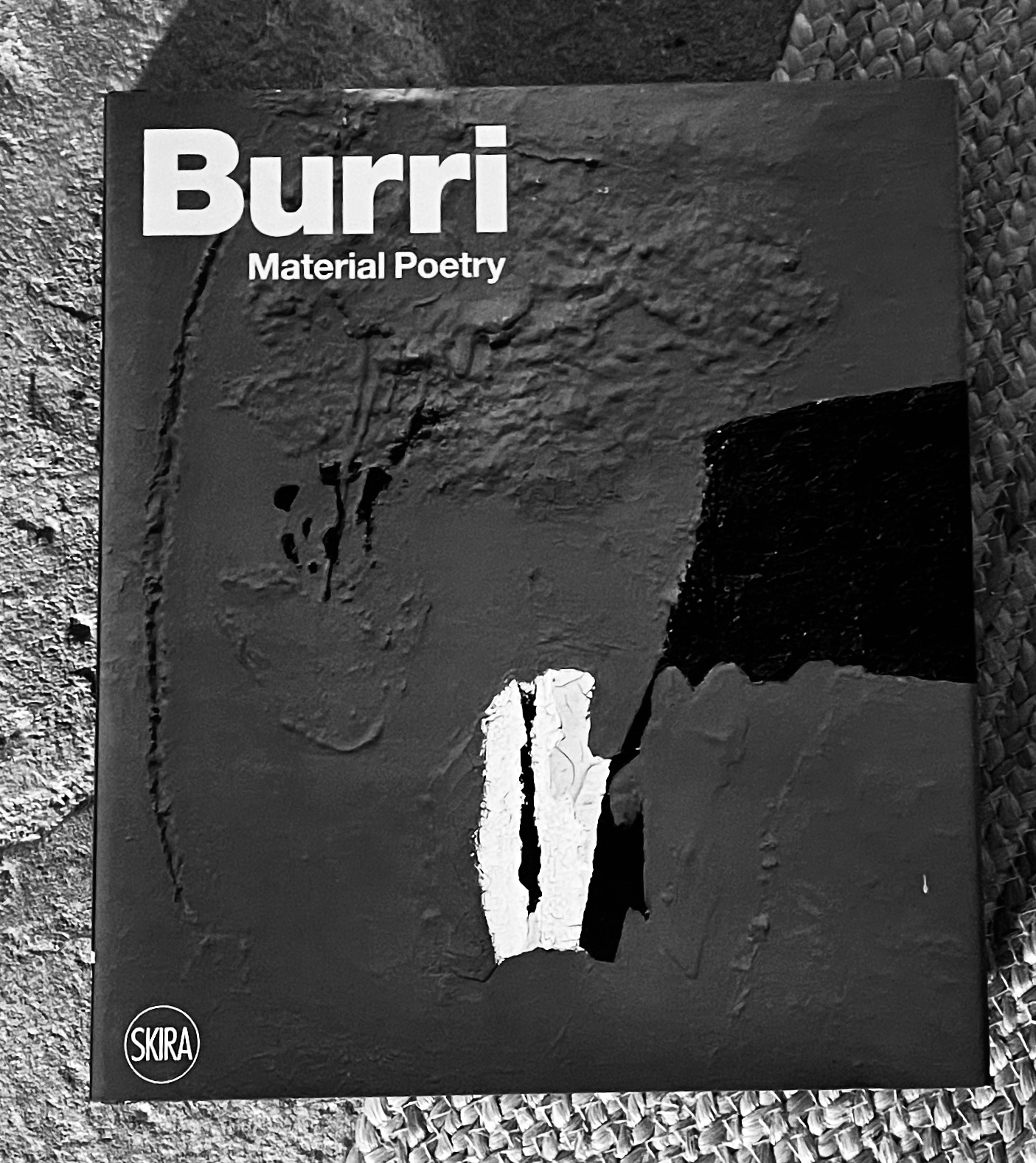
    Book: Burri; Maestri del XX Secolo
    A must-have if you dare. It’s not for the faint-hearted, much like Burri’s work itself.


    Bottom line: Burri didn’t make art for comfort. He made art that demanded you look at what others tried to hide—the decay, the damage, the beautiful mess of existence. And that, mate, is punk as hell.

    What do you think? Should art comfort us or confront us? Drop your thoughts in viaminimal@gmail.com

  • Off the Beaten Tracks: Long Distance Calling

    Off the Beaten Tracks: Long Distance Calling

    Long Distance Calling hit my radar way too late in my journey through the instrumental realms of Rock and Metal. Honestly, I still don’t get it—while I was already deep in the RUSH catalog from day one, Long Distance Calling keeps popping up in every “essential prog bands” list in those specialised music mags. How did I miss this?

    The Basics: Formed in 2006 in Münster, Germany, Long Distance Calling carved out their own lane in the post-rock landscape. Their sound? Think adventurous post-rock that isn’t afraid to wander into post-metal territory when the mood strikes.

    What Makes Them Tick: Here’s the thing—they’re built on extended instrumentals that create atmospheric soundscapes hitting you right in the chest. No filler vocals, just pure sonic architecture.

    The Lineage (Some of Their Influences): You can hear the DNA of PORCUPINE TREE, LUNA, and ISIS woven throughout their discography. They’re instrumental, progressive, contemporary—all the descriptors fit. Call it instrumental atmospheric rock, post-metal, or post-rock; whatever label you slap on it, the music speaks for itself.

    Essential Listening – Start Here:

    Black Paper Planes

    Voices

    Aurora

    Trauma

    Nucleus


    IMO: For Post-Rock/Metal heads, this is essential listening. Each album carries a central theme that anchors the whole experience. The songwriting is playful, packed with ideas and stylistic shifts. Sometimes they drop samples that make you wonder if you’ve heard them elsewhere—but you can’t quite place them. That mystery is part of the magic.

    Bottom line: If you’re into instrumental music that breathes, builds, and blasts, Long Distance Calling deserves a permanent spot in your rotation. Better late than never.

  • Off the Beaten Tracks: Not Your Average Playlist

    Off the Beaten Tracks: Not Your Average Playlist

    Here’s Blood Ceremony

    So, picture this: it’s 2006 in Toronto, and a bunch of Canadians decide that regular rock is a bit dull. Enter Blood Ceremony. They’ve carved out a niche so specific it sounds like a surreal dream: “flute-tinged witch rock.” And yes, that is exactly what it sounds like.

    They’ve taken the heavy, sludgy bits of doom metal and mixed it with the trippy vibes of 70s psychedelic folk, then sprinkled in a dash of occult rock for good measure. The result? A sound that feels like you’ve stumbled into a séance in a dusty library, but someone’s playing a killer guitar solo in the background.

    Here’s the thing that makes them proper unique:

    • The Flute Factor: Forget the bagpipes; they’ve got flute solos that would make Ian Anderson nod in approval. It’s weirdly brilliant.
    • The Lyrics: We’re talking black magic, grimoires, and references to classic horror flicks. It’s like The Wicker Man meets a heavy metal concert.
    • The Sound: Think early ’70s “downer” rock (the good kind, of course) fused with prog-rock complexity.

    Who They’re Stealing From (and Why It Works): They’re basically time-travellers from the late 60s and early 70s. Their playlist is a who’s who of the occult and the heavy:

    • The Heavy Hitters: Black Sabbath, Uriah Heep, Electric Wizard, and Witchfinder General.
    • The Prog/Folk Crew: Osanna, Pentagram, Pagan Altar, plus the British folk legends Pentangle and Fairport Convention.

    If you love the gloomy majesty of Black Sabbath (RIP Ozzy) but secretly wish Jethro Tull played more doom metal, you’re in the right place.

    Essential Listening: Don’t know where to start? Queue up these five:

    • Witchwood (live)
    • Eldritch Dark
    • Goodbye Gemini
    • Ipsissimus
    • The Devil’s Widow

    IMO: They’ve got that unique “occult folk-metal” signature sound that makes you wonder if their setlist includes incantations or just really good solos. Either way, it’s a proper trip.

  • The Donkey Palio: A Madcap Adventure You Won’t Believe

    The Palio dei Somari: Where Donkeys Steal the Show

    Since 1966, Torrita di Siena has been celebrating its Palio dei Somari—a festival that puts Saint Joseph (patron of carpenters) and his humble donkey companion centre stage. Born to honour both toil and simplicity, the event sees the town’s eight contrade battling for a painted banner on St Joseph’s feast day.

    Each district—Porta a Pago, Porta a Sole, Porta Gavina, Porta Nova, Le Fonti, Stazione, Refenero, and Cavone—sports its own colours, crest, and spot-on 15th-century garb. It’s Siena’s famous contrada rivalry, but with a donkey twist and a whole lot of character.

    Source: torritadisienaliving.it

    One Last Lap: The Palio dei Somari on my channel